Takeaways
Students cannot detect your internal nervousness or self-doubt—they're absorbed in their own practice, not monitoring your confidence level
Too much anatomical detail confuses students rather than helping them. One clear theme woven throughout class is more valuable than too many layers of information
Using visible notes demonstrates preparation and professionalism, not inexperience. Many veteran teachers keep sequence notebooks beside their mat
The Gap Between Teacher Anxiety and Student Reality
New yoga teachers often experience intense anxiety about appearing inexperienced. You worry about forgetting what you taught on side 1 when it comes to teach side 2. You worry about having imperfect cues. You think everyone can see how nervous you are. As a yoga teacher - whether a brand new one, or even if you've been teaching for some time, it's easy to assume that your students are closely monitoring and judging your performance more than they are there to just get on the mat and do their practice. And as much as that anxiety can feel real, I'd like to offer you a gentle perspective shift in the form of yoga philosophy: you're letting your ego get in the way of your dharma, and you're making it all about you. What if you made every thought in your head about your students, rather than about you and your performance..?
Teaching your first yoga classes feels like being on stage with a spotlight. You assume everyone's watching your every move. But the reality is more like a movie theater where you're the projectionist: everyone's absorbed in their own screen (their practice), and probably not watching you work the equipment.
This misunderstanding drives most teaching anxiety. Students are focused almost entirely on their own experience. They're grateful for any guidance they receive and typically won't notice if you're feeling less confident or if you don't provide extensive technical details in every pose.
The yoga class experience centers on what happens on each student's mat, not what happens in the teacher's head. Understanding what students actually notice versus what they don't can dramatically reduce your anxiety and help you focus energy where it truly matters - on being the vessel through which yoga flows.
What Students Don't Notice (Even Though You Think They Do)
Your Nervousness and Lack of Confidence
Students generally cannot detect your internal anxiety or self-doubt. Only you know you're feeling uncertain, and it rarely shows in ways students can perceive.
You might feel your heart racing and your mind going blank, convinced everyone can see your panic. But to students, you just look like a teacher pausing to think for a moment before giving the next cue. Your internal experience and their external perception are completely different movies.
Most practitioners don't track whether they've completed both sides of a pose or notice if you deviate from your planned sequence. They're absorbed in their own practice, not auditing yours. If something goes wrong during class, most students won't even realize it. They lack the reference point of your planned sequence and assume whatever you're teaching is intentional.
I will share one exception to this 'rule,' however. One time I was teaching a class in Berlin, Germany, and I had the most intense migraine. I don't know why I didn't cancel the class, because I remember feeling like my head was about to explode and/or that I was about 1 second away from puking the entire class.
But, as a broke yoga teacher, I pushed through. One of my friends showed up for the class, who is a yoga teacher herself, and a really great one. The rest of the class were a mix of regulars and students I had never seen before.
During the class, I couldn't focus on anything, I was in so much agony. I had a pretty complex vinyasa flow class planned, and I remember getting through side 1 without any major hiccups. But when it came time to teach the second side (aka left leg forward in the standing poses this time, etc.), I was in so much pain that I completely blanked on what I had taught on side 1. And my head hurt so bad, that I couldn't focus on my notebook to even read my sequence.
So I ended up teaching something completely different on side 2. No clue what I taught. I suffered through the rest of the class and managed not to puke. In my book, that was a win. As I was packing up and incredibly grateful to be heading home to bed, two students came up to me for the 'post-class chat' - if you're a yoga teacher, you know what I mean. :)
The first one was a student I had seen in class just a couple of times before. She came up and told me that the class was amazing, and she is so grateful she found me in a city with so many yoga teachers. She also asked me if I lead 200 hour yoga teacher trainings, and said she was eager to get into deeper studies with me.
After she left, the second student came up to chat - it was my yoga teacher friend. "What happened?!" she asked me. I was horrified. She had definitely noticed the completely different flow between the two sides and noticed that my teaching was just generally really bad. :) I told her I had a raging migraine and rushed out the door to go to bed for a couple of days.
But this just shows how two students have completely different experiences in the exact same class. And - odds are - if you don't have a veteran yoga teacher in your class like I did on that painful day, all of your students will think your class, and your teaching, are life-changing. Because at the end of the day, no matter how you grade your performance, because you're sharing the power of yoga with your students, your class will always be incredible.
Should You Even Give Anatomical Cues..?
But let's get into a bit of nitty gritty. My 200 hour YTT students often ask me if they should give really detailed anatomical cues. And I always say this - most students don't notice or miss extensive anatomical explanations. In fact, too much information can confuse them rather than help. And, on top of that, I don't think most people go to yoga to listen to their teacher rattle of anatomy parts.
I remember taking a yoga class with a popular teacher from the US not that long ago. He was so focused on what muscles we were stretching and contracting in each pose, that it felt like we had dropped into an anatomy class. In Downward Dog, of course he told us we were stretching our hamstrings. In a side bend, he let us know what our intercostals are and that we were stretching them. In Pigeon Pose he told us that if we were suffering from Piriformis Syndrome, that we should be doing this pose for 5 minutes a day on each side. Almost every single pose came to us like this: "Come into X pose. Go a little bit deeper to activate your Y muscle. Feel your Z muscles stretching. You probably need to stretch these muscles more, cos modern life, etc. Come out of the pose." When every pose follows that same formula, it's easy to think that yoga is literally an exercise in naming muscles and not much more.
When yoga teachers make anatomy the only focus, in my opinion, this is when yoga turns from something really cool, into something clinical, dry, and so incredibly boring. I left that class without getting any insight into the heart and soul of yoga. Instead, it felt like a visit to the doctor.
I tell this story because I know a lot of teachers are worried that they won't come off as professional enough if they don't talk about which muscles are stretching in each pose. But...before you go and look up all that info, take a step back and ask yourself these questions:
"Why do I go to yoga class?"
"What do I want to get from yoga?"
"What about yoga inspires me to keep coming back?"
And maybe some of you will say that it's the full-blown anatomy lesson you get that lights you up. But I'd be willing to bet that most of you would put learning anatomy pretty low on the list of reasons you do yoga.
What You Might Want To Cue Instead
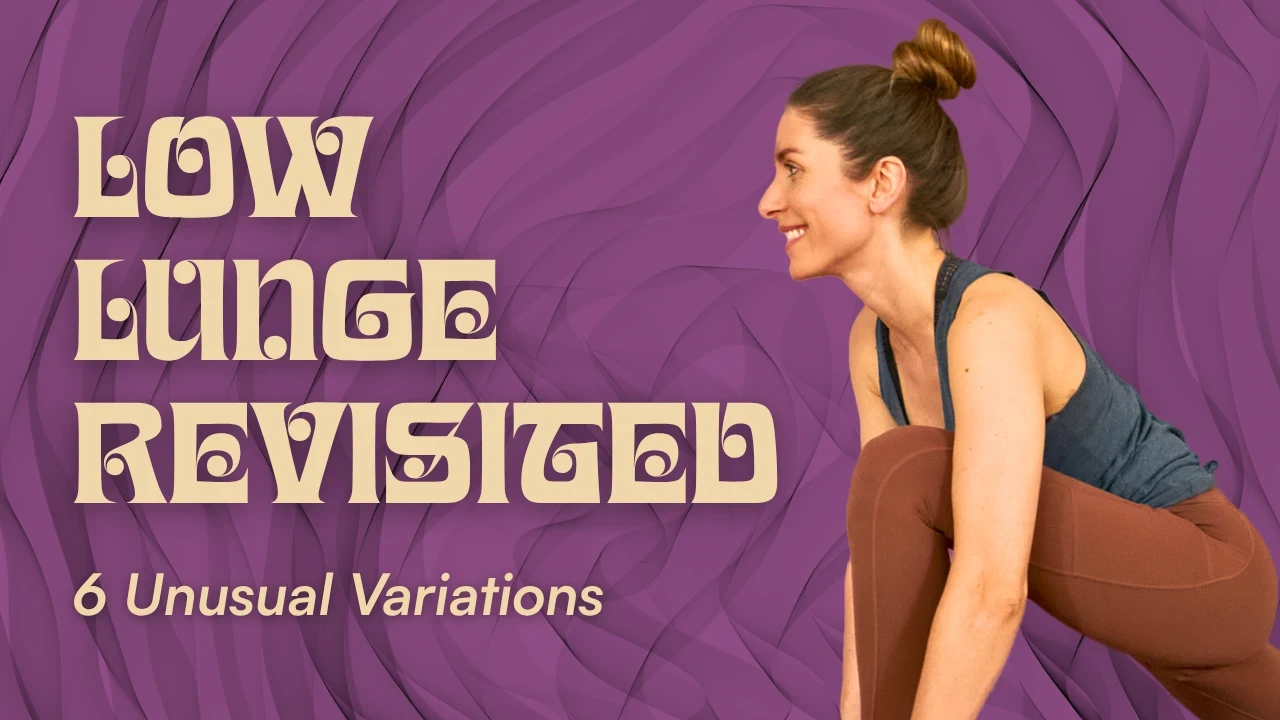
If you're thinking about which anatomical cues to give your students, I'd like to encourage you to give them technical cues instead. So for example, instead of getting students into a Low Lunge and then listing off all the muscles that are stretching or contracting (boring for most people!), give them something awesome to do in the pose.
Cue them to pull their legs towards each other energetically to bring engagement to their lower body. Have them take the energy they create from that move and use it to gather energy into their pelvis. From that point, cue them to direct that energy up their spine, up their arms and fingers, and out through the crown of their head, expanding in all directions.
These types of cues don't just allow them to experience a common pose in a new way, they also help students understand the depth of yoga. They learn that yoga helps us create our own internal energy and direct it anywhere we choose. That's so much more powerful and interesting than simply "stretching the hip flexors and engaging the glutes."
Is It Amateur To Use Notes To Teach...?
I get this question all. the. time. from students in my 200 hour training: "Will I look unprofessional if I use notes when I'm teaching?" And I get it - there are lots of yoga teachers who don't use notes. Some might "go with the flow" and create sequences on the fly. Other teachers might teach a certain style of yoga (Bikram, Core Power, etc.) where they have almost no creative license to change the sequence. If you teach the exact same class every day of your life, of course you probably won't need notes.
However, if you are a yoga teacher who teaches multiple styles of yoga, and are not tied down to a branded sequence, you will probably want to be creative with each and every class you teach. Does that mean you should:
Spend an hour thinking about what style of class you're gonna teach that day
Spend another hour brainstorming the poses to include
Spend another hour sequencing those poses intelligently
Spend another hour coming up with and weaving in a theme
Spend another 4 hours learning anatomy so you can "sound smart" (kidding! :))
Spend 3 hours practicing and memorizing the whole thing?
I hope you see how ridiculous it would be to do that every time you teach a class.
Having your sequence notes visible during class is not only acceptable, but recommended. Many experienced teachers keep a notebook beside their mat during in-person classes. It shows that you yourself came up with the class. That you, yourself, took the time and energy to plan something really great for your students. And it shows that you want to keep growing as a teacher - not just teaching your 'go-to's' every class, but using your brain power to keep class interesting for both you and your regular students. That is so much better than not using notes, am I right..?
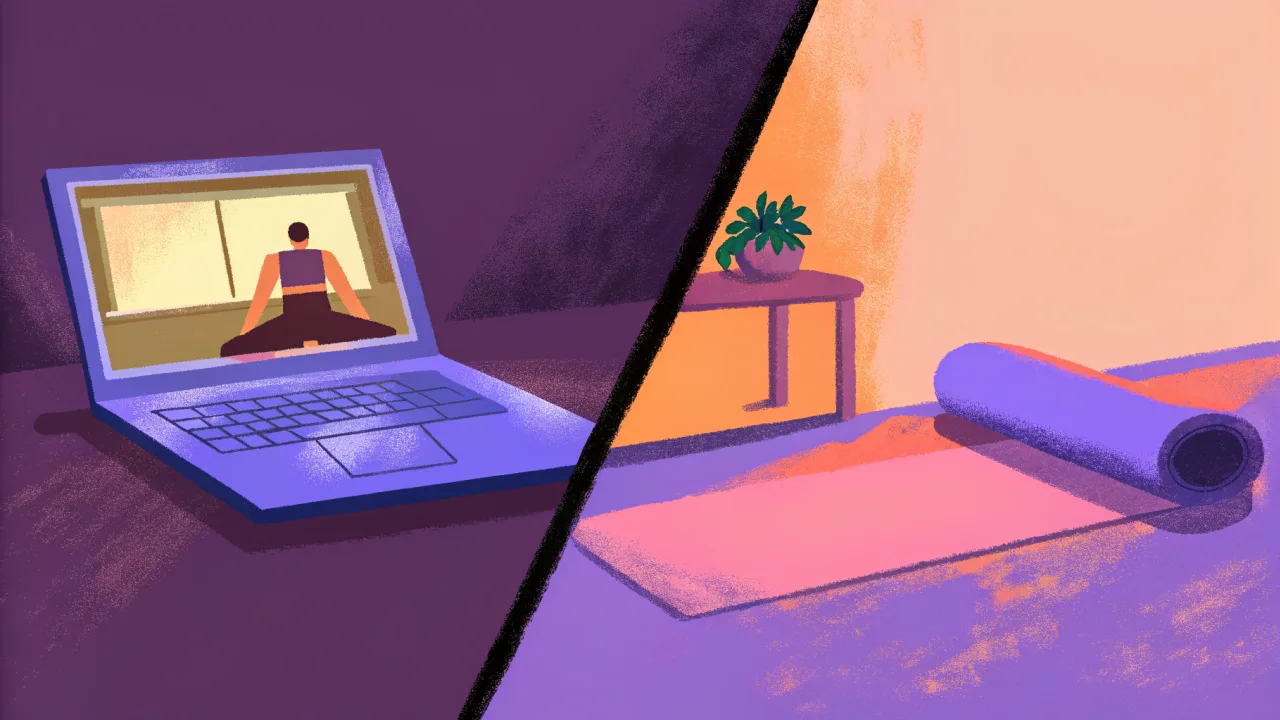
And the reason I talk about this so much with the Movement Wisdom 200 hour trainees, is because in the pre-recorded classes in the online YTT, you don't see me using a notebook very often. But - and this is huge - I have my teaching notes spread out all over the room!! I have two big whiteboards that you can't see from your viewpoint. One is positioned so I can see it when I face the long edge of my mat (camera 1), and the other is positioned for me to see it when I face the top of my mat (camera 2).
I use my notes for every single class I teach! And because I have the opportunity to have my notes written out in XL script on the whiteboards and in two different locations so I never have to stop and move my notebook to another position, I take advantage of that. But it doesn't mean that I teach without notes. And when you practice with me in-person, you will 100% see me teach with my notebook right smack-dab next to my mat. And I'm more than ok with it!
What Students Actually Do Notice (And Appreciate)
Clear, Focused Guidance on One Main Theme
So let's pivot now and talk about what students actually do notice in class.
In my experience, students respond positively when teachers select one main theme or focus for cues, whether it's shoulder integration, foundation work, or energetic concepts, and weave this central theme throughout multiple poses.
Teaching with one clear theme is like following a single thread through a tapestry. Students can track it, remember it, and feel it connecting everything together. Teaching with scattered themes is like trying to follow ten different threads at once; everyone just sees a blur.
And when your theme lands for a student, they will be your student for life. I remember teaching a heart-themed Mother's Day class at Lululemon back in the day. The cues I gave were about expanding the heart not just in the front-body (where we generally imagine the heart to be), but also in the back-body and sides. The poses had us create energy on all sides of the heart. We visualized our heart. We paid attention to our heartbeat in the opening breathwork and in Savasana. We worked on sending our heart energy outwards, beyond the boundary of the skin.
I had so many students come up to me after class and thank me. And many of them became regulars, not just in my studio classes in town, but followed me all over the world for retreats and even YTT. That's the power of a great theme!
Having a focused approach to theming and cueing prevents the confusion that happens when students receive too much information simultaneously or different focus points for cues in every single pose. In comprehensive training programs like mime, teachers learn extensive detail about each pose intentionally to build a full toolkit of knowledge, but effective teaching involves distilling this information rather than delivering everything at once. I like to say, "Don't give away all your gems in one class."
Authenticity and Shared Struggle
Many teachers are scared that they will look like beginners in the poses, and use this as a reason not to teach. But teachers who embrace their lack of flexibility, their wonky bone structure (I sometimes call out my bow-leggedness in class!), or wobbling and falling when attempting difficult poses during class actually enhance their teaching by showing students that yoga practice is about exploration rather than perfection. And if you truly embrace yoga's teachings, you can show students that yoga helps to not take ourselves too seriously and drop our ego-identification.
Acknowledging your own challenges with something like 'Wow, this pose is just not happening for me today! If you feel frustrated by your wobbles, too, send that out with your exhale." This creates connection and permission for students to be imperfect and just enjoy the ride. This vulnerability demonstrates that the practice is about the internal experience, and non-attachment to perfection, not achieving picture-perfect shapes.
Where to Focus Your Teaching Energy
The gradual progression of teaching one pose at a time, incorporating breathwork, and slowly building complexity helps develop natural confidence. This confidence comes from witnessing positive student responses, not from achieving some arbitrary standard of perfection.
Confidence often emerges after teaching your very first class to friends, family members, or familiar students, when you experience natural flow in your teaching and everyone appears to be enjoying the practice. Rather than trying to read student faces during practice, which new teachers often misinterpret, pay attention to feedback students give after class to gauge their actual experience.
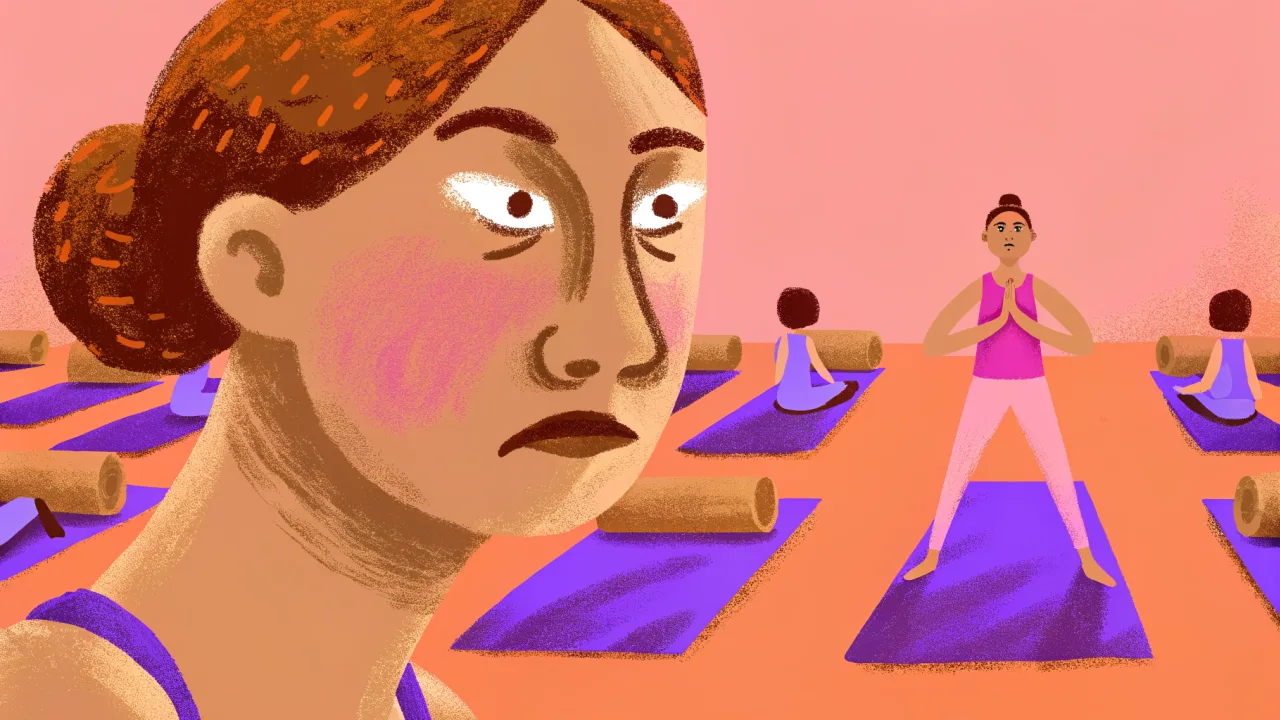
During practice, a furrowed brow doesn't mean 'this teacher is terrible,' by the way. And it's so common to look around the room and see frowns and scowls. But don't take it personally, believe me! These stern faces usually mean: "I'm concentrating hard on balancing," or "Meditation is hard, but I can do this!" A closed-eye grimace doesn't mean "I hate this teacher, I hate this class!" it means "This pose is intense." Student faces during yoga look nothing like customer satisfaction faces in normal life, I promise.
When you step in front of the class to teach, focus your energy on putting your ego to the side and just letting YOGA do the work instead. Remember how powerful this practice is, and that you're there to be the vessel through which yoga flows. You can do no wrong if you get out of your own way and let your passion and love for yoga shine through.
Please don't worry about your own pose execution, your demonstration skills, or whether you appear 'expert enough.' Students came to practice yoga, to feel something. To transform themselves in some way. They did not come to class to evaluate your teaching. They're grateful for clear guidance and the space you're holding for their practice.