Takeaways
Active (yang) and yin yoga can use seemingly identical physical shapes that create opposite effects based on muscular engagement, alignment approach, and hold duration
Yang practice uses precise muscular engagement and neutral alignment to strengthen muscles and build heat, while yin uses complete softening to target deeper fascia and connective tissues
You cannot effectively target fascia while muscles are contracted, and you cannot strengthen muscles while they're completely relaxed. The approaches are mutually exclusive by design
In yin practice, your bent knee position reveals your skeletal structure rather than flexibility. Some hip sockets are naturally deeper or shallower, creating hard stops that stretching cannot change
Understanding these distinctions empowers you to adapt the same pose for different purposes depending on what your body needs on any given day
The Same Pose, Two Completely Different Experiences
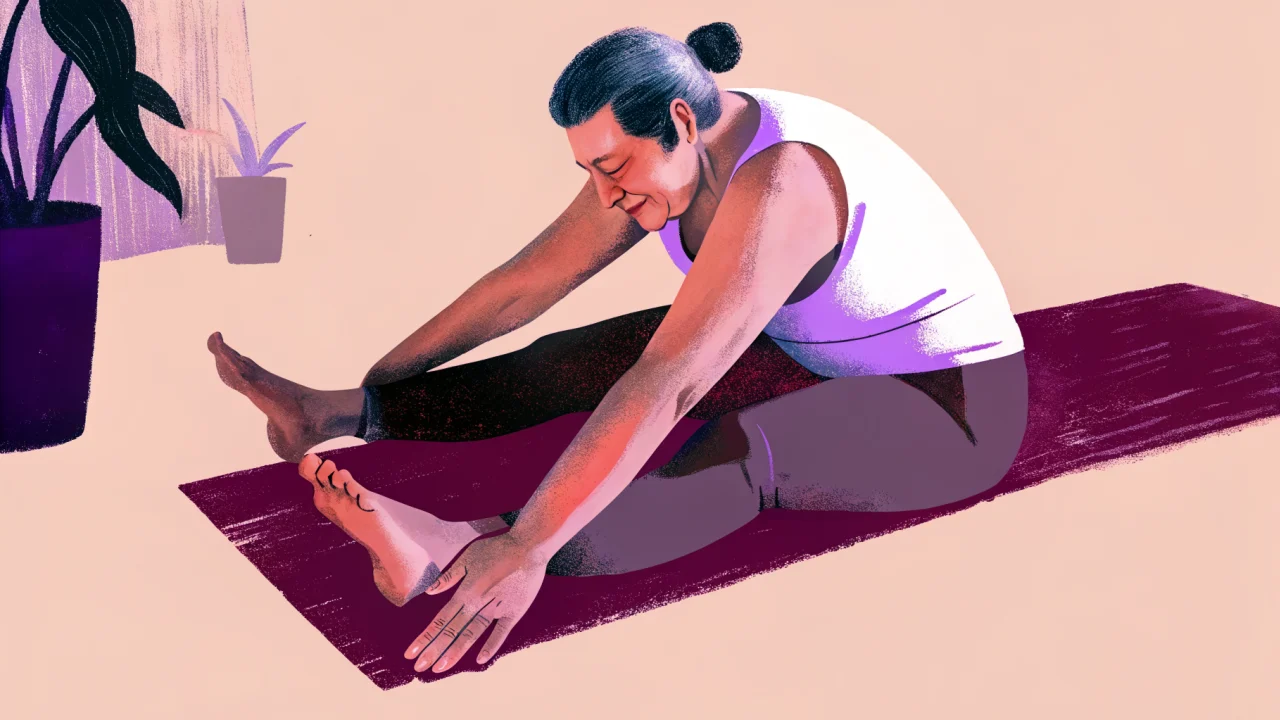
Place one leg straight in front of you, bend the other with your foot against your inner thigh, and fold forward. This basic shape appears in yoga classes everywhere. But depending on how you approach it, you're doing two entirely different practices.
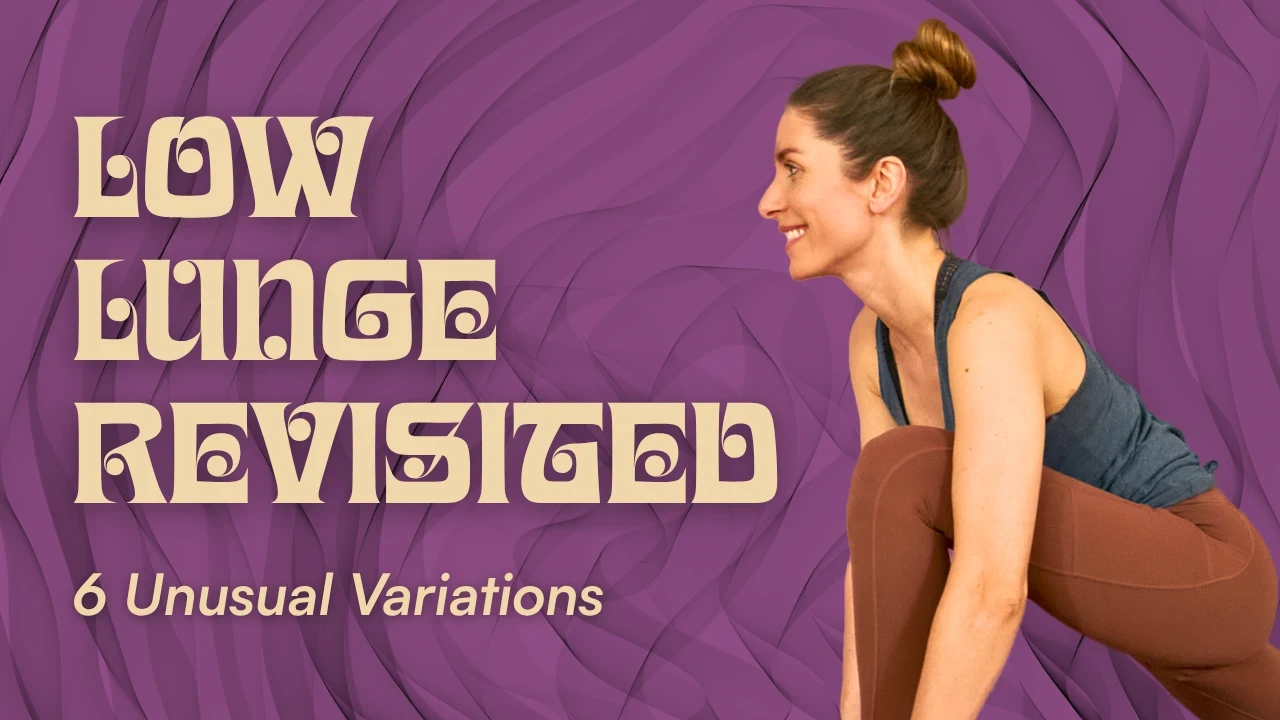
In active yoga, this is Janu Sirsasana (Head to Knee Pose) - a precisely engaged forward fold that strengthens muscles and builds heat. In yin yoga, it's half butterfly - a completely passive pose that targets fascia and calms your nervous system. It's the same leg position, but a very different internal experience.
I like to equate this difference in active vs. passive poses to the arm rests on an airplane; you can either use them to hold on for dear life, or you can use them to support your arms to help you relax. In the active version of Head to Knee Pose, for example, you would engage your leg muscles in the lower half of your body, as you simultaneously strive to lengthen your spine in the upper body. The body is very active, the muscles contracted, in this option.
The same shape in the Yin practice, however, has you flop your legs and feet and round your spine as you dangle your head down towards your chest. The goal is the opposite here - no muscular contraction at all, if possible.
Active styles use muscular engagement and neutral alignment to build strength and target muscles. Yin practice uses complete softening and passive release to target deeper connective tissues and fascia. Understanding this distinction transforms yoga from exercise routine into sophisticated self-care tool where you become your own best teacher. And once people start to practice Yin Yoga, many find that what they need is much more Yin and a lot less Yang in their practice, and in their life!
To really get a feel for the difference between doing a pose in an active yoga class (like Hatha or Vinyasa), vs. in a Yin Yoga class, let's take a closer look at Head To Knee Pose in these two settings.
Understanding the Yang Approach: Active Engagement in Head To Knee Pose
Setting Up For Janu Sirsasana in a Hatha or Vinyasa Flow Class
Janu Sirsasana: Sanskrit name meaning 'Head-to-Knee Pose,' a seated forward fold with one leg straight and one bent with foot to inner thigh. The traditional name suggests your head touches your knee, but this isn't the goal for most practitioners. I like to cue my students to lengthen their belly button towards their knee, as this creates even more of a neutral spine (sometimes called a "flat back") in the pose.
Begin with both legs straight out in front of you in a seated position. Take both hands behind your right knee. Lift up your knee and keep it bent as you lower the knee out to the side to bring the sole of your right foot to the inside of your left thigh. Using a blanket under the hips and a block or bolster under the bent knee are great options. This is the basic shape that remains consistent across both styles.
Press down into your hands to lift your hips slightly, creating a small arm balance. With this little one-centimeter lift of your but, swing your sitting bones back behind you so you're sitting up tall and not slouching backwards. This establishes the forward tilt of your pelvis that's crucial for active forward folding. This puts your pelvis in neutral, which creates a natural lumbar curve in your lower back.
Having a neutral spine maintains your body's natural architecture, which is often a feature of active styles of yoga. The setup phase alone reveals the yang approach: intentional muscular work rather than passive collapse into the shape.
Using Precise Muscular Actions Throughout the Pose
In your straight leg: flex your foot and evert it. Eversion means turning the pinky-toe edge of your foot up towards your knee - just a couple centimeters is enough. You'll know you were successful in this move if the entire ball of your foot - from big toe side to pinky toe side - are on a pretty even plane. This simple action wakes up the muscles that stabilize your knee and puts it in neutral alignment. It activates muscles along your outer shin that you might feel if you hold the pose long enough.
In your bent leg: press down through the top of your foot and 'click' your toes down into the mat. This foot activation is similar to what we did in the straight leg, except here, the goal is to create more stability and engagement in the muscles around the bent knee to prevent it from over-twisting.
Now, your core and spine: with your hands on either side of your legs, press down into your fingertips and drag your hands back toward your hips without moving them in space while sending your belly button and chest forward. Think of this like plate tectonics; your hands pull one direction while your chest moves the opposite way. The tension between these opposing forces creates length and stability through your spine.
I like to cue my students to direct their chest diagonally between their legs rather than twisting the torso toward the straight leg. This helps protect your SI joints from instability, particularly important for postpartum practitioners or those who've stretched extensively without strength work and feel like 'their pelvis is about to fall apart' - I know this from personal experience after having two babies!
Hold for 3-10 breaths maintaining all these active engagements. The work is constant, but the key is to only engage your muscles up to about 20% of their maximum effort. The goal is to help with neutral alignment more than it is to actually use yoga as a strength-training practice.
The Purpose Behind Yang Practice
Active yoga styles like Hatha, Vinyasa Flow, Power Yoga, Ashtanga, and hot yoga, emphasize refining poses through specific muscular actions rather than simply relaxing completely into a shape. This approach creates stability, creates tons of energy in the body, and aligns your joints in a more neutral position than what we get in the Yin practice.
In active yoga styles like Vinyasa Flow, the focus is on muscles as the primary tissue being worked. You're strengthening, building endurance, and creating heat through sustained contraction and these little muscular engagement techniques. Teachers in active classes are primarily focused on movement instruction, like guiding students from pose to pose with technique tips and alignment details.
The Yin Perspective: Same Pose...Done Very Different
Everything Softens
Half Butterfly is the Yin Yoga name for the same leg position as Janu Sirsasana. But in Yin, this very similar shape is practiced with complete muscular release and a passive forward fold. It's part of the 'butterfly' family of hip-opening poses, with the full "Butterfly Pose" having both knees bent out to the sides.
To do this same shape in the Yin style, take the exact same leg position - left leg straight out in front of you, and the sole of your right foot to your left inner thigh. Now release every single muscular engagement from the active version.
Relax both feet completely. No more flexing, no more clicking toes into the mat, no more eversion actions. Allow your back to round naturally. The lumbar curve you worked to maintain in yang practice now releases into flexion - round your back. Let your shoulders drop, neck release, belly soften completely. There's no core engagement whatsoever.
It helps to imagine a marionette puppet when the puppeteer sets down the controls and all the strings go slack. The puppet collapses into its natural resting shape - a crumpled heap on the floor. That's the level of release you're looking for in Yin, no joke! And using props to support your crumpled and collapsed body is a great way to prevent over-stretching in any part that feels sensitive or painful. This complete release is what turns the active Hatha shape of the pose into a Yin pose instead.
Walk your hands forward, back, or out to the sides wherever comfortable, or create a pillow for your forehead with your hands or bolster or block. Positioning in a Yin pose is about comfort, not alignment precision. This fundamental principle applies across 95% of poses: when transitioning from active to Yin, everything becomes soft and completely passive. You can toss alignment out the window in Yin, and just let your body melt like butter on your mat.
Bone Structure Reveals Itself
Your straight leg will naturally settle based on your individual skeletal architecture of your hip joint. Your left foot might fall out completely to the side, or dip toward center, or maybe your toes will point straight up without you even trying. There's no 'correct' way to look in this passive version because your bone structure determines your leg's natural resting position.
I like to teach my 200 hour YTT students that hip sockets are similar to the dishes in your cupboard. People with a ton of flexibility in their hips have joints that are shaped like a shallow saucer - i.e. very open with almost no lip at the sides. Other people with more limited range of motion in their hips might have joints that are more like a coffee mug, with very sharp boundaries around the sides that keep what's inside from spilling to the outside. If you imagine your hip joint like a ping pong ball that's either sitting inside a wide-open saucer, or a much more contained coffee mug, it's easy to see why unique bone structures can affect how "deep" you go in a pose like Half Butterfly or Head To Knee Pose. When you stop using muscles to hold positions, and you let your muscles completely release, your hip-joint's natural shape reveals itself.
Anatomically speaking, for all the body-nerds out there (I see you, I love you!), this is where the Yin practice becomes revelatory. Without muscular effort holding positions, your actual skeletal structure becomes visible. Some practitioners discover their bent knee naturally floats high off the floor, suggesting a tighter hip socket or different bone angles. Others find it drops easily, suggesting a shallower socket.
Time and Gravity Replace Muscular Force
Another huge difference between the active Head to Knee and the passive Half Butterly, is how long you stay in the pose. In Janu Sirsasana, you might hold the pose for anywhere from 5 - 15 breaths. In the Yin version of the pose, you could stay for anywhere between 1-10 minutes. I recommend using a stopwatch or old-school sand timer hourglass to keep the time, just so you're better able to hold side 2 for the same amount as side 1.
Time and gravity are the biggest external factors in the Yin Yoga practice, replacing the muscular energy and force (aka technique) used in Hatha and Vinyasa-based styles. This represents a significant mental shift for practitioners accustomed to active yoga. The body opens through passive release rather than active stretching. Many people who have practiced active styles of yoga for a long time find Yin challenging, not because of the poses, but because of its slowness. With nothing to do in the pose but collapse and wait many minutes until it's over, some restless minds can feel impatient. But the beauty of Yin, is that, if we stay with it, those moments of doing 'nothing' in the pose can turn into the most powerful and beneficial moments of our entire day.
Extended hold times of the poses in Yin also create new opportunities for exploring variations. You might start basic, transition to a deeper forward fold after a minute, add side bends or twists, play with your props in ways that time doesn't allow for in other practices, and end up transforming one pose into an entire sequence of explorations. This is a great way to "pass the time" for anyone struggling with the mental challenge of long periods of stillness in the poses.
Targeting Different Tissues Entirely
Fascia: Connective tissue that wraps and connects muscles, organs, and structures throughout the body. Responds to long-duration passive stress rather than active stretching. Requires muscle relaxation to be effectively targeted.
Yin's complete muscular relaxation allows the pose to reach down into the body's deeper connective tissues and fascia, rather than staying in the muscles.
Fascia responds to long-duration, low-intensity positive "stress" (similar here but different from "stretch") by gradually releasing and reorganizing collagen fibers. This can't happen when muscles are actively engaged because muscle contraction prevents this positive stress from reaching your deeper layers.
This is the counterintuitive difference: in the Yin practice, students should completely relax to target fascia and connective tissues, contrasting with active practice where engagement targets muscles for strength. The body often opens in surprising ways through passive release. Practitioners accustomed to pushing and striving in active practice may find Yin's surrender approach unlocks areas of their body that have previously resisted active stretching. I can't tell you how many of my students have come up to me over the years and told me that Yin was the thing that finally helped them open up their hamstrings, hips, or shoulders. It works on a much deeper level, and can often create much deeper release.
Why the Same Shape Creates Opposite Effects
Muscle Engagement Determines Tissue Targeting
When muscles actively contract (yang approach), they become the primary tissue receiving stress. Muscle fibers experience micro-tears that rebuild stronger, blood flow increases, metabolic waste products accumulate creating that familiar muscle fatigue.
When muscles completely relax (the Yin approach), stress bypasses them entirely and reaches deeper fascial layers, joint capsules, ligaments, and tendons. These tissues have different cellular structure and respond to different types of stress.
Imagine pressing on a stack of cushions. If the top cushion is firm and inflated (muscle engaged), your hand never reaches the cushions underneath. If the top cushion is soft and deflated (muscle relaxed), your hand sinks through to compress the deeper layers. Even if you're pushing down with the same pressure, different tissues are affected and that changes the outcome dramatically.
This concept is a little complex, but it's the basic biomechanics of how force transmits through layered tissues based on which layers are engaged versus relaxed. You cannot effectively target fascia while muscles are contracted, and you cannot effectively strengthen muscles while they're completely relaxed. The approaches are mutually exclusive by design, and makes it all the more wonderful to practice both active and passive styles of yoga!
Practical Applications: Choosing Your Approach
When to Practice Yang (Active) Versions
Seek out active yoga if you're trying to build strength or create some heat in the body.
Choose yang practice when working on precise alignment patterns or body awareness. The focused attention on specific actions develops proprioception and movement intelligence.
Turn to active practice when your energy feels low or stagnant and you need invigoration in the form of strong breathing and even stronger poses. Yang practice - like a sweaty Hatha of Flow class - is great for getting you unstuck and getting your energy flowing again.
Also, if you're short on time, but you still want an efficient full-body practice, active sequences cover more poses in less time than Yin's extended holds.
When to Practice Yin
Seek Yin when you need deep relaxation or stress relief. Yin's passive nature activates your parasympathetic nervous system (rest-and-digest mode).
Choose Yin when targeting joint mobility or fascial release. Connective tissues require the long-duration, low-intensity stress that only Yin provides.
Turn to Yin when you're feeling overstimulated, anxious, or mentally scattered. Yin's stillness and inward focus calm the nervous system.
When recovering from intense training or injury, Yin provides gentle stress without the muscular fatigue of active practice.
The Beauty of Adaptability
The beauty of understanding Yin versus active, Yang practice, is the ability to adapt the same basic pose to serve different purposes depending on what your body needs on any given day.
Looking to gently stress connective tissues for mobility as you relax deeply into stillness? Find your appropriate edge and settle in for longer holds (the Yin approach).
Wanting to build strength and heat? Maintain muscular engagement and neutral alignment (the Yang approach)?
Same shapes, two completely different effects based on how you approach it. Knowing how to practice both Yin and Yang styles of yoga empowers you to choose a practice that suits your body and mind on any given day.
Neither approach is superior. They serve different purposes and target different tissues, making them complementary rather than competing.
This knowledge transforms yoga from exercise routine into sophisticated self-care tool where you become your own best teacher.