Yoga Philosophy

The Bhagavad Gita Story: Why This Ancient War Text Became Yoga's Most Popular Teaching

A warrior refuses to fight his own family. His charioteer reveals the nature of the soul, karma, and what it means to live a spiritual life in the world. This conversation became the foundation of modern yoga.

Created by:Jess RoseJess RoseRead time:12 min

Takeaways

  • The Bhagavad Gita teaches that you can reach enlightenment through action in the world, not just through meditation in isolation

  • Your dharma is your unique purpose based on your natural gifts. Following it, even when difficult, is the path to spiritual liberation

  • The Gita presents four paths to the same goal (action, devotion, knowledge, meditation) because different people need different approaches

  • Taking right action without attachment to outcomes means serving something greater than your ego's desires for reward or recognition

A Story for Anyone Who's Lost Their Way

The Bhagavad Gita addresses something universal: feeling lost, purposeless, or overwhelmed by life's chaos. Everyone faces moments of questioning what they're doing and why. This ancient text remains relevant because it meets us right in that confusion and offers a way through.

The title translates to "The Song of God" (Bhagavad = divine/blessed, Gita = song). Remember, in yoga, God refers to the underlying and all-pervasive energy that permeates you, me, and the entire universe around us. It's a story about how yogis interpret the laws of nature—fundamentally a collection of yoga teachings woven into a dramatic, somewhat relatable narrative (it's about a warrior, but still...kind of relatable :)).

Gandhi called The Gita his "personal spiritual dictionary" and read it every day from his twenties until his death. As opposed to some dry, philosophical text, the Gita presents profound spiritual wisdom through a story filled with drama, betrayal, doubt, and very messy human struggles. That's why it endures.

The Story: A Battle Between Two Families

The Setup

The Gita is a small section within the Mahabharata, the world's longest epic poem. Think of it as a pearl inside an oyster—700 verses of pure spiritual teaching embedded in an epic war story.

In the story, two families are at war: the Kauravas (currently in power) and the Pandavas (who lost their kingdom in a rigged dice game). The Kauravas were supposed to return the kingdom after the Pandavas' thirteen years of exile, but they refused. They wouldn't give back even five villages. War became inevitable.

This war is the foundation of the Gita, but here's the key: the battle represents an internal, spiritual battle that each of us faces every single day.

The Main Characters

Arjuna: Our hero and a legendary Pandava archer. Arjuna is a kshatriya (warrior by birth and training), fighting to restore his family's rightful kingdom. He's skilled, dutiful, and has spent his entire life preparing for this moment.

Krishna: Arjuna's charioteer and childhood friend, who is actually an avatar (incarnation) of Lord Vishnu—the preserver god. Arjuna knows Krishna is special, but doesn't comprehend the full magnitude of Krishna's divine nature until later, when Krishna reveals his Vishvarupa (universal form)—showing himself as the entire cosmos, containing all gods, all beings, all of time.

The Central Dilemma

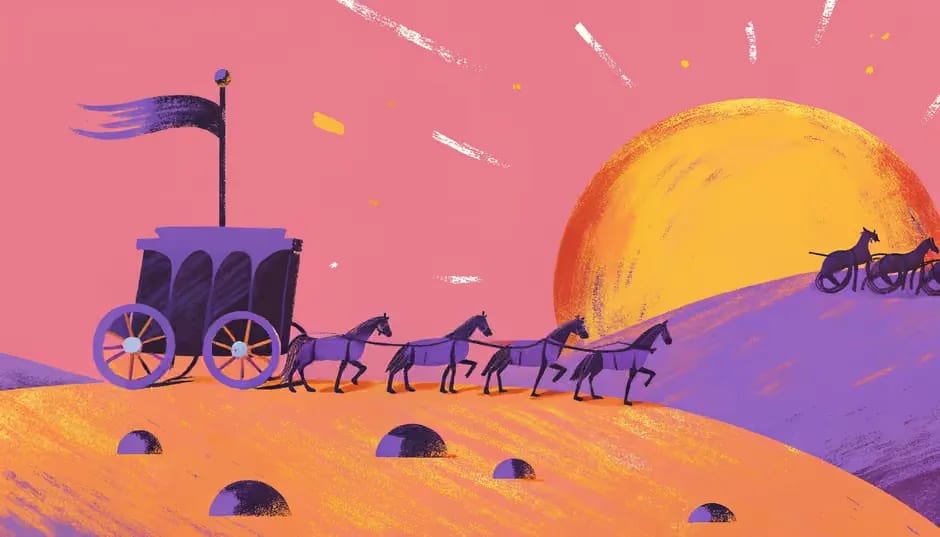
Before the battle begins, Arjuna asks Krishna to drive closer so he can see the faces of his enemies.

He looks out and sees his old archery teacher Drona, who taught him everything he knows. His beloved grandfather Bhishma. His cousins. His uncles. Childhood friends. People he's laughed with, trained with, eaten meals with.

Arjuna's hands start shaking. His famous bow, Gandiva, a gift from the gods, slips from his grip. His legs give out. He collapses in his chariot and tells Krishna, "I can't do this. I won't fight. What kind of victory is worth killing everyone I love? I'd rather be killed myself than kill them."

This is the moment the Gita truly begins.

Arjuna, the great warrior, completely breaks down. He's overwhelmed by conflicting duties (dharma). As a warrior, he's supposed to fight for justice. As a family member, he's supposed to protect and honor his relatives. How can both be true?

This creates the story's central question, the question that makes the Gita relevant to anyone, anywhere: What do you do when what you should do conflicts with what you want to do? What do you do when all your options seem terrible?

Why This Became Yoga's Most Popular Text

This is where the Gita becomes revolutionary, and why it's still yoga's most beloved text 2,000+ years later.

Yoga for People Living in the World

Before the Gita, classical yoga texts like the Yoga Sutras presented yoga as something for renunciants: sitting in caves, meditating in isolation, withdrawing from worldly life...what's called sannyasa (renunciation). To be a "real" yogi meant giving up your job, your family, your responsibilities, and retreating from society.

The Gita smashed that model completely.

Krishna doesn't tell Arjuna to run away to the forest and meditate. He doesn't say "become a monk." He tells Arjuna to stay exactly where he is, in the middle of the chaos, with all his responsibilities, facing his hardest challenge. And that can be his yoga.

The Gita taught that you can reach moksha (liberation/enlightenment) through action in the world, not just through meditation. You don't have to drop everything and become a hermit. You can have a house, a job, a family, and still follow a yogic path. You can find enlightenment on the battlefield of your actual life.

This was earth-shattering. It made yoga accessible to ordinary people living ordinary lives; parents, workers, warriors, anyone with responsibilities and relationships. This is one massive reason why the Gita remains so popular today: it meets you where you are, in the midst of your messy life.

Following Your Dharma

Dharma: Your unique purpose based on your natural gifts, strengths, and, in India, your "position" in society.

Krishna's entire teaching to Arjuna hinges on one concept: dharma. It's often translated as "duty," but it's so much more than obligation. It's your authentic path, your cosmic role, what you're here to do.

Krishna tells Arjuna: "You are a kshatriya. You were born a warrior, trained as a warrior, and placed in this situation as a warrior. This is your dharma. Running away from it won't bring you peace. It will destroy you from the inside. The path of another (in this case, turning away from battle), even if it seems easier or more comfortable, is dangerous. It's better to do your own dharma imperfectly than someone else's perfectly."

The thing that makes this teaching so relevant for so many people, is that it isn't one-size-fits-all. What's right for Arjuna (fighting) might be completely wrong for someone else (say, a teacher or a healer). The Gita doesn't give you a rulebook of "always do X, never do Y." It teaches you to discover your own unique path. This resonated with yogis back in the day, and still does to this day.

Even if you're not interested in enlightenment (which is the ultimate goal of the Gita), most of us want to find our life's purpose and live according to our highest potential. The Gita teaches that following your dharma, even when it's difficult, even when it feels impossible, is the path to meaning, fulfillment, and yes, eventually, liberation.

But how do you follow your dharma when it feels wrong? When it breaks your heart? This is where Krishna goes deep...

The Teaching: You Are More Than Your Body

Krishna's Radical Perspective on Death and My First-Hand Experience Of It

Arjuna's whole problem is that he thinks killing his relatives means destroying them forever. Krishna addresses this head-on with one of yoga's most confrontational ideas: we are never born, and we never die.

He tells Arjuna that the atman (soul/true self) is eternal. It cannot be cut by weapons, burned by fire, dried by wind, or wet by water. It simply IS, unchanging and indestructible.

What we see as a person - their body, personality, their physical form, etc. - is just "the clothes they're wearing." It's an outer layer of flesh and blood that isn't their true nature. Your body isn't YOU. The body is temporary; it's the invisible parts of you that are YOU, and eternal.

Krishna even goes further: In killing a body in a just war while following his dharma, Arjuna might actually be helping those souls move forward on their karmic journey toward moksha (liberation). Their True Self doesn't die, it just moves on to its next chapter.

This is a massive shift in perspective. If you're not your body, and you're not really "killing" anyone because the soul is eternal, then what are you afraid of?

It's a hard pill to swallow, I know. And it raises SO MANY QUESTIONS about what is moral vs. immoral. And I don't have the answers, just FYI. But I do have a personal story where this idea played out in front of my eyes. [Trigger warning: car crash and death coming next...]

On one of my trips to India about 10 years ago, I was in Goa on my way to the airport in a taxi. We were driving down the highway and all of a sudden a bus just ahead of us crashed into a motorcyclist, who had then dominoed and hit another motorcyclist. Both of the motorcyclists were lying on the road next to our car, motionless. Lifeless.

I was in the backseat crying and freaking out as people got out of their cars to go check on the men lying on the highway. One of the men was just outside my window. No one could get either of them to move. I sat there, hoping these men didn't have wives and kids, hoping they didn't have close friends or relatives. Of course they did, though, and that made me cry harder.

After a few minutes, the taxi driver turned around and asked, "Why are you crying?"

I was offended and shocked. I said, "Why aren't you crying?"

He said, "Well, these men are not dead. This is only their body." That was that. He didn't say anything else.

I sat there in silence and watched him watch the scene, completely neutral. There was no sadness on his face.

As we waited for the street to clear, I chewed on the driver's perspective. It was a lesson I had just learned a few weeks earlier in a yoga philosophy lecture, but at the time, it just seemed like a nice idea.

At this moment, though, feeling like my driver had no respect for human life, it felt like a very confrontational teaching all of a sudden. I wanted to believe that I am eternal, but didn't want to think that people would just shrug their shoulders if my body was lying lifeless in the street.

Over the next months, and even years, as I processed this event and also dealt with the death of my best friend, the teaching started to make more sense to me, and I even came to accept it.

A Western vs. Eastern View of Death

In the West, we tend to see death as final. It's the end of everything. Someone is "gone" when their body dies.

In Indian philosophy, a person's True Self is seen as traveling through samsara (the cycle of birth, death, and rebirth), returning to Earth in a new body or moving through different realms and fields of energy. This teaching is difficult for Westerners to digest but is more fluid and natural in Indian culture, where it's woven into the fabric of daily life.

The body returns to dust, but what is immaterial, timeless, and limitless continues forever.

Why This Teaching Matters For Your Life

You might be thinking: "Okay, but I'm not fighting in a war, I'm not in the midst of death right now...so how does this help me?"

Here's how: When you understand that you're not your body, you're not your thoughts, not your emotions, suddenly you have perspective. When you don't get picked for the new job, when your partner leaves you, when you embarrass yourself beyond what you thought possible....your body-mind experiences all of it, but your True Self is untouched. It's all just temporary experiences of a temporary form.

This doesn't mean you don't feel pain. Of course you do, because you're human. But underneath it all, there's something in you that can't be damaged, diminished, or destroyed. And when you start to identify with THAT instead of your temporary circumstances, your life changes in undeniable ways.

Making Ancient Wisdom Accessible

Why the Gita Endures

The concept of the eternal self is just one of many profound teachings in the Gita. Krishna also discusses karma (the law of action and consequence), nishkama karma (acting without attachment to results), the different paths of yoga suited to different temperaments, and how to navigate the tension between what we want (preya) and what we know is right (shreya). These are incredibly powerful concepts that deserve their own deep dive - perhaps in another article.

But even with just this one teaching about the True Self, you can see why the Gita has remained relevant for over 2,000 years. It doesn't just offer abstract philosophy, it gives us wisdom for navigating our very real human struggles.

An Invitation to Read

The Gita is a little bit of a difficult book despite being considered poetry. It speaks of big, higher truths that require contemplation and often guidance to fully grasp.

But I definitely recommend reading it, as it tends to be an eye-opener for many yoga students.

Here are my recommended translations:

- The Isherwood/Prabhavananda translation is excellent, and the one I recommend the Movement Wisdom 200 hour YTT students read.

- However, Eknath Easwaran's version is most famous in the West, and will be easy to find at your local library, I'd bet.

- If you'd like to read it from a more tantric perspective, then Swami Rama's version might be a good fit for you

Different translations bring forth different aspects of the Sanskrit original, so if you start one but don't feel like it's reaching you, then try another one!

The Gita isn't just a text to read once and put on your shelf. It's a living guide meant to be returned to again and again, just as Gandhi did every single day for decades.

Each time you read it, you'll be a different person facing different challenges, and the teachings will reveal new layers of wisdom. Understanding the context, with Krishna and Arjuna's relationship, the war, the cultural background, helps these ancient lessons land in your modern life.

Ultimately, the Gita is asking you the same question it asked Arjuna 2,000 years ago:

Will you run from your dharma, or will you face it?

Will you identify with your temporary body-mind, or recognize your eternal true nature?

These questions don't have easy answers. But they're the questions worth asking yourself today, tomorrow, and for the rest of your life.

That's why the Bhagavad Gita endures. Not because it's old or sacred, but because it works. It meets you in your crisis, sits with you in your confusion, and offers you a path through.

The rest is up to you. Happy reading! :)

FAQ

FAQ

What is the Bhagavad Gita story actually about?

The Gita tells the story of a war between two families, the Kauravas and Pandavas, over a kingdom. The hero Arjuna realizes he must fight his friends, teachers, and relatives, and refuses. His charioteer Krishna reveals he's actually a god and teaches Arjuna about dharma, karma, and the eternal nature of the soul. The physical battle represents the internal spiritual battles everyone faces.

Why is the Bhagavad Gita so important in yoga philosophy?

The Gita revolutionized yoga by teaching that you can reach enlightenment through action in the world, not just meditation in isolation. This made yoga accessible to people with jobs, families, and worldly responsibilities. Krishna mentions yoga over 100 times in the text and presents multiple paths to the same spiritual goal based on individual nature. Gandhi read it daily as his "spiritual dictionary."

How can a story about war be about yoga and nonviolence?

The battle is a metaphor for internal struggles everyone faces. No action is inherently good or bad, intention and dharma determine rightness. Arjuna's duty as a warrior in a just war is his path to enlightenment. Gandhi used this text to guide his nonviolent movement because his "war" was fought through peaceful action, but it was still his dharma as a warrior for justice. The teaching applies to whatever battlefield you face in life.

What does dharma mean in the Bhagavad Gita?

Dharma is your unique purpose or duty in life based on your natural gifts and role. It's living in alignment with your true nature and the laws of the universe. Following your dharma is the path to spiritual liberation, even when difficult. It's different from Western career choice because it's about your essential nature and contribution to the greater good. The path won't be smooth, but challenges are part of the spiritual journey.

What are the main teachings from the Bhagavad Gita?

The Gita teaches that you are not your body; the soul is eternal and cannot be killed. Take action without attachment to outcomes or rewards. Follow your dharma even when challenging. Every action has consequences, so choose the right action over what you want. The text presents four paths to enlightenment: action, devotion, knowledge, and meditation, because different people need different approaches.

Which translation of the Bhagavad Gita should I read?

Eknath Easwaran's version is most popular in the West and highly accessible. The Christopher Isherwood and Swami Prabhavananda translation is also excellent. Different translations emphasize different aspects of the Sanskrit original, so reading multiple versions provides fuller understanding. The text is challenging despite being poetry, so understanding the context of Krishna's teachings to Arjuna helps apply these ancient lessons to modern life.

Can I practice yoga without understanding the Bhagavad Gita?

Yes, but the Gita provides context for many yoga concepts you'll encounter. Terms like karma, dharma, and the goal of enlightenment all come from this text. Understanding the Gita helps you see yoga as more than physical practice, it's a complete philosophy for living. Even if you never read it, its teachings have shaped modern yoga in profound ways.

More lessons

Jess in Standing Forward Fold on a soft orchid-to-lilac background, folded deeply over her legs with her hands flat on the floor and her head hanging down – Movement Wisdom lesson on how to do Standing Forward Fold
Yoga Poses

Pose breakdown: Standing Forward Fold

Article
A woman in Child’s Pose on a soft violet background, kneeling with the hips back toward the heels, forehead on the floor and arms reaching forward – Movement Wisdom lesson on how to do Child’s Pose
Yoga Poses

Pose breakdown: Child’s Pose

Article
The Movement Wisdom yoga teacher earnings calculator, tilted on a plum gradient: $40 per class and 5 classes a week come to $866 a month – Movement Wisdom lesson on yoga teacher earnings
Yoga Business

Yoga Teacher Earnings Calculator

2 min read
Wheel Pose with straight arms and bent knees, hands and feet on the floor and the front of the body lifted in an arch – Movement Wisdom lesson on how to do Wheel Pose
Yoga Poses

Pose breakdown: Wheel Pose

Article
Half Pigeon Pose folded forward onto the forearms, front knee behind the front wrist and back leg extended – Movement Wisdom lesson on how to do Half Pigeon Pose
Yoga Poses

Pose breakdown: Half Pigeon Pose

17 min read
Jess Rose in Downward-Facing Dog on a yoga mat, hands and feet down and hips lifted into an inverted V – Movement Wisdom lesson on how to do Downward-Facing Dog
Yoga Poses

Pose breakdown: Downward-Facing Dog

14 min read
Floating flashcards with Devanagari letters circle a lone tree on a purple hill at dusk – Movement Wisdom
Yoga Poses

Flip & Learn: Sanskrit Pose Names

5 min read
Open flashcard showing the Sanskrit word dharma beneath a golden sun and rippling rings – Movement Wisdom
Yoga Philosophy

Flip & Learn: Yoga Philosophy Words

5 min read
Flashcard reading the Sanskrit word prana in front of rainbow arcs over rolling purple hills – Movement Wisdom
Breathwork

Flip & Learn: Pranayama Names

5 min read
Glowing card with the Sanskrit word chakra against radiating sunburst rays at dusk – Movement Wisdom
Yoga Philosophy

Flip & Learn: Chakras & Nadis

5 min read
Yoga teacher cupping a student’s upper arms as he reaches overhead, in front of an illustrated violet landscape with rolling fields
Teaching Skills

How to Give Yoga Assists (and When Not To)

8 min read
Split illustration of a calm blue ocean beside a crowded red ocean with a fishing boat and shark chasing fish
Yoga Business

Business Strategy for Yoga Teachers: Red Ocean vs. Blue Ocean

4 min read
Illustrated city map seen from above, its streets and blocks standing for the many places yoga teachers get hired - Movement Wisdom
Yoga Teacher Training

37 Places Where Yoga Teachers Get Hired

7 min read
Illustrated figure sweeping a floor covered in large empty speech bubbles, clearing a glowing path behind them
Yoga Anatomy

10 Outdated Yoga Cues You Can Safely Ignore

28 min read
Illustrated person standing over a long table covered with dozens of yoga teacher training brochures, weighing which one to choose
Yoga Teacher Training

The 10 Hallmarks of an Excellent Yoga Teacher Training

12 min read
Grid of six illustrated objects representing the six yoga archetypes: stethoscope, kettlebell, tape measure, open book, flowing ribbon, and crystal – Movement Wisdom yoga archetype quiz
Yoga Styles

The 6 Yoga Archetypes: Which One Are You?

6 min read
Illustrated grid of glowing star-marked tiles laid across violet hills under a dusk sky – Movement Wisdom Yoga Wordle
Knowledge

Yoga Wordle

2 min read
A tattooed student lifting into Cobra Pose while Jess Rose guides her shoulder – title card for the Cobra Pose Asana Lab
Yoga Poses

Asana Lab: Cobra Pose

22 min watch
Jess Rose in a wide side-bending lunge with one arm reaching overhead – title card for the Dancing Warrior Asana Lab flow class
Free with email
Yoga Poses

Asana Lab: Dancing Warrior Flow

15 min watch
Jess Rose smiling with her palms together in a sage-green studio, a man seated in front of her – title card for the Stress Buster restorative yoga class
Free with email
Yoga Class

Stress-Busting Restorative Yoga

56 min practice
Jess Rose kneeling on a mat, drawing her back foot in toward her body — title card for the Full Body Flexibility yoga class
Yoga Class

Full Body Flexibility

37 min practice
Title card for the Nadis and Chakras 101 lesson
Free with email
Knowledge

Nadis & Chakras: A Beginner's Guide to Your Subtle Body

12 min read
A man holding a low plank over a bolster while Jess Rose coaches him from beside – title card for the Chaturanga Dandasana Asana Lab
Free with email
Yoga Poses

Asana Lab: Chaturanga

27 min watch
A smiling pregnant yoga teacher in a seated side bend, one arm overhead and a hand on her belly – title card for Prenatal Yoga Challenge, Day 3
Free with email
Yoga Class

Prenatal Yoga Challenge Day 3

30 min practice
A smiling pregnant yoga teacher on hands and knees with a folded blanket under her knees – title card for Prenatal Yoga Challenge, Day 2
Free with email
Yoga Class

Prenatal Yoga Challenge Day 2

29 min practice
A smiling pregnant yoga teacher in a low side lunge with her hands on the mat – title card for Prenatal Yoga Challenge, Day 1
Free with email
Yoga Class

Prenatal Yoga Challenge Day 1

26 min practice
Jess Rose in a low lunge with her hands on two cork blocks in front of white curtains – title card for the Mighty Leap yoga class
Free with email
Yoga Class

The Mighty Leap

85 min practice
Jess Rose balancing on one leg with a block under her standing foot and her arms stretched wide – title card for the Block Party vinyasa flow class
Yoga Class

Block Party

87 min practice
Jess Rose smiling in a deep squat with her feet on a cork block, preparing for Crow Pose – title card for the Crow Pose Made Easy lesson
Yoga Poses

Crow Pose made easy

18 min watch
Jess Rose and a student in a lunging side stretch, their raised hands touching – title card for the Movement Wisdom Yoga hatha class
Yoga Class

Movement Wisdom Yoga

48 min practice
Illustrated pregnant person in supported prenatal yoga pose — warm rose palette, Movement Wisdom
Yoga Styles

Why Prenatal Yoga Is Different From Every Other Safe Pregnancy Exercise

18 min read
Jess Rose smiling in a wide straddle, leaning on a bolster that rests on a block – title card for the Yin Philosophy yin yoga class
Free with email
Yoga Class

Yin Philosophy

84 min practice
A mud-covered figure curled into a child's pose on a wet beach with waves breaking on rocks behind – title card for Embryo, the nature of yoga
Knowledge

Embryo — The Nature of Yoga

6 min watch
Illustrated figure dissolving into rippling waves of light, evoking the quantum wave-particle nature of energy – Movement Wisdom
Myths & Spirituality

You Don't Have to Believe in Energy to Feel It

16 min read
Jess Rose seated in a bright studio, title card for the Aligning With Your Purpose lesson
Yoga Philosophy

Aligning with Your Purpose

21 min read
Illustrated meditating figure surrounded by coins and financial symbols – Movement Wisdom blog on the financial reality of teaching yoga professionally
Yoga Business

Can You Actually Make Money Teaching Yoga? 7 Reasons Why It's More Viable Than You Think

7 min read
Illustrated diagonal split showing a dynamic yang yoga pose and a yin yoga figure – Movement Wisdom blog on how the same shape creates different effects in the body
Yoga Anatomy

From Yang to Yin: How the Same Shape Creates Completely Different Effects in Your Body

14 min read
Illustrated open notebook on a yoga mat – Movement Wisdom blog on what yoga students actually notice in class and what teachers often get wrong
Teaching Skills

What Your Yoga Students Actually Notice (And What They Don't)

15 min read
Illustrated figure in a yoga balance pose with abstract shapes – Movement Wisdom blog on why seniors yoga training is essential for every modern yoga teacher
Free with email
Teaching Skills

Why Senior Yoga Training Is Essential for Modern Yoga Teachers

49 min watch
Jess Rose sitting beside a man resting under a striped blanket in a brick-walled studio – title card for the Winter Water kidney meridian yin class
Yoga Class

Winter Water Kidney Meridian

80 min practice
Two illustrated open palms facing forward – Movement Wisdom blog on how anxiety rather than arm strength is the real block in yoga arm balances
Yoga Practice

Why Your Anxiety, Not Weak Arms, Blocks Your Arm Balances

9 min read
Illustrated stack of books with candles and winter objects – Movement Wisdom blog on creating a restorative yoga space at home in winter
Yoga Styles

How to Create the Perfect Space for Winter Restorative Yoga Practice

10 min read
Illustrated Swiss army knife with multiple tools – Movement Wisdom blog on twelve reasons why the 200-hour online yoga teacher training covers everything you need
Yoga Teacher Training

12 Reasons Why Movement Wisdom Is The Only 200-Hour Yoga Teacher Training You'll Ever Need

13 min read
Illustrated vinyl record with circular design elements – Movement Wisdom blog on four ways to deepen your yoga practice beyond the physical postures
Knowledge

4 Ways to Level Up Your Yoga Practice Beyond Poses

5 min read
Illustrated brain at the bottom center surrounded by a luminous violet mandorla glow with radiating light — Kapalabhati pranayama shining skull breath, Movement Wisdom
Breathwork

Kapalabhati Pranayama: The Breath That Makes Your Brain Shine (Literally)

5 min read
Illustrated figure in a yoga pose with bold geometric shapes – Movement Wisdom blog on the most common concerns before starting a 200-hour yoga teacher training
Yoga Teacher Training

The Top 5 Common Concerns Before Starting Your 200-Hour Yoga Teacher Training

51 min watch
A man resting on his side over a bolster while Jess Rose sits beside him in a brick-walled studio – title card for the Deep Pressure yin yoga class
Yoga Class

Deep Pressure

52 min practice
Illustrated concentric wood grain rings – Movement Wisdom blog on the true meaning of ahimsa beyond vegetarianism in yoga philosophy
Yoga Philosophy

What Ahimsa Really Means: Beyond Vegetarianism to True Non-Harming

8 min read
Illustrated figures in colourful yoga lunge variations – Movement Wisdom blog on creative low lunge poses to mix up your yoga practice
Yoga Practice

6 Creative Low Lunge Variations To Mix Things Up

7 min watch
Illustrated circular anatomy diagram with compass elements – Movement Wisdom blog on how arm anatomy affects hand placement in every yoga pose
Yoga Anatomy

Why Your Arm Anatomy Determines Optimal Hand Placement in Every Yoga Pose

11 min read
Illustrated hypnotic spiral target – Movement Wisdom blog on a five-step framework for choosing the right yoga teacher training
Yoga Teacher Training

The Simple 5-Step Framework For Choosing Your Yoga Teacher Training

10 min read
Illustrated laptop next to yoga mat and blocks – Movement Wisdom blog comparing online and in-person yoga teacher training formats
Yoga Teacher Training

Online vs. In-Person Yoga Teacher Training: Which Format Is Right for You?

13 min read
Illustrated anatomical heart with flowers and plants – Movement Wisdom blog on loving kindness meditation and its effect on the stress response
Meditation

Loving Kindness Meditation: A Buddhist Practice That Rewires Your Stress Response

14 min read
Illustrated abstract geometric arrows and shapes – Movement Wisdom blog and free podcast on the seven biggest mistakes to avoid when choosing a 200-hour YTT
Free with email
Yoga Teacher Training

7 Mistakes to Avoid When Choosing Your 200-Hour YTT

78 min read