Why assists matter
Some of my most memorable moments on the yoga mat happened while a teacher was assisting me. Sometimes the assist was so in tune and so perfectly timed that it brought me exactly where I needed to be. Other times it was misjudged, driven by ego or poorly performed, and I walked out of class injured.
Done well, an assist shows a student that they’re seen and that they’re your priority, even if it’s just for a couple of rounds of breath. For people who go through their day feeling a bit invisible, that moment of connection can be a real bright spot (and a big reason they keep coming back to your classes).
And still, you never, ever have to give your students physical assists. It’s one of the riskiest parts of our job, and it takes lots of practice and feedback. I didn’t feel comfortable giving assists after my first 200 hour teacher training, and only marginally comfortable after my second. These days I have more than a thousand hours of study under my belt, and assists are still a challenge with every new student I meet.
Assists vs. adjustments
Search for “yoga adjustment” and you might find pictures of teachers standing on top of their students in a seated forward fold. Adjustments like that push a body into a depth it couldn’t reach on its own, driven by the teacher’s idea of how the pose should look. Think of a chiropractor forcefully “fixing” you.
An assist starts from the opposite place. Your student’s pose, just like their body, is unique and adapted to their bone structure. Nothing is broken. The assists I teach don’t get anyone into a pose they couldn’t do on their own. They help your students find stability, grounding, length and ease.
So before you move in, ask yourself: what is my goal here? If your student looks uncomfortable or is struggling, an assist might be just what the doctor ordered. If they look perfectly content, step back and check whether your ego is doing the talking. It’s easy to measure our worth as teachers by how deep our students get into their forward folds (the ego is a sneaky little snake like that!).
Observe before you touch
Get permission. My favorite way is little markers at the top of the mat, like paper circles or Om symbols from a bowl at the front desk. An intake form with an “I’d like assists” box works too, and tells you about injuries at the same time. You can also ask in the moment, but it puts people on the spot and they might feel they have to say yes.
Find your perch. Stand wherever you get the best view of what matters in the pose. As a rule of thumb, face your students’ faces: in Warrior II, stand in front of them so you can see their chest, shoulders and breath. In Chaturanga and Down Dog, the side view shows you the arms and the shape of the spine. You’ll be moving around the room a lot. :)
Decide who needs you first.
Anyone who could fall. Balances and inversions come first, because someone flailing in Headstand puts their neighbor at risk too. Offer the wall, or be the support beam yourself.
Breath and alignment. Look for held breath, a face turning red, or someone forcing their front shin parallel in Pigeon because their neighbor is doing it.
Foundation. You cued the right foot forward and they have their left foot forward.
Feel-good assists. If someone’s pose looks beautiful but they seem a little stern, a relaxing assist might be exactly what gets them out of their head.
Three ways to assist
Verbal assists use only your voice. They’re the safest option, they help the whole class at once (as long as your cues are clear and up to date), and they let students find the best version of the pose on their own: “Spread your fingers wider and root down into your index and thumb knuckles.”
Target assists give your student something to move toward. If someone’s Down Dog is so short that their back rounds, draw a line with your hand toward the top of the mat and ask them to bring their fingertips to your palm. Or hover your hand above their head: “Touch my hand with the crown of your head.” They’re still the ones doing the moving.
Physical assists use touch, and they’re for when your verbal and target cues just don’t seem to be working. (The exception is feel-good assists, which students can’t give themselves.)
Eight kinds of physical assists
Foundational: the basic shape, like which foot is forward in a lunge. Often a verbal cue is enough.
Spatial: playing with distances, like the hands closer together in Down Dog or the feet wider in Plank. “Walk your hands in to here. Do you feel more stable?”
Stabilizing: a point of balance, like your hip lightly against theirs in Half Moon or your hands on their hips in Tree.
Neutrality: a neutral spine or pelvis, most often in forward folds.
Opening: more space for a student whose pose is already going well. I keep these to backbends like Cobra and Up Dog, because going deeper in a forward fold carries much more risk.
Extension: length through the spine, for example with your hands on the side ribs.
Grounding: gentle weight on the thighbones in Paschimottanasana (only if the legs are straight).
Feel good: no goal other than a day at the spa. These are the reason I go to yoga class! Savasana is my favorite place for them.
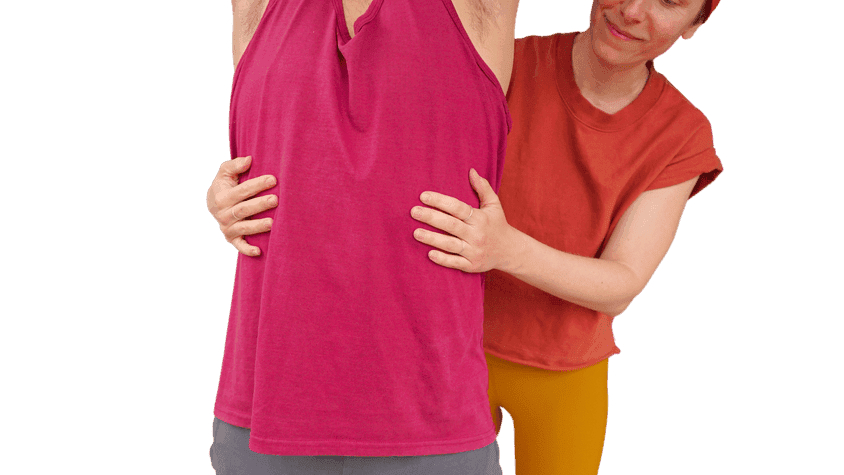
An extension assist: hands on the side ribs invite length through the side body.
Your stance comes first
If you’re holding someone’s weight with unsteady feet and a rounded spine, that’s a recipe for disaster for your body and theirs. Just like the oxygen mask on the airplane, take care of yourself first, with power coming from strong legs and a neutral spine. You can always step out and start over.
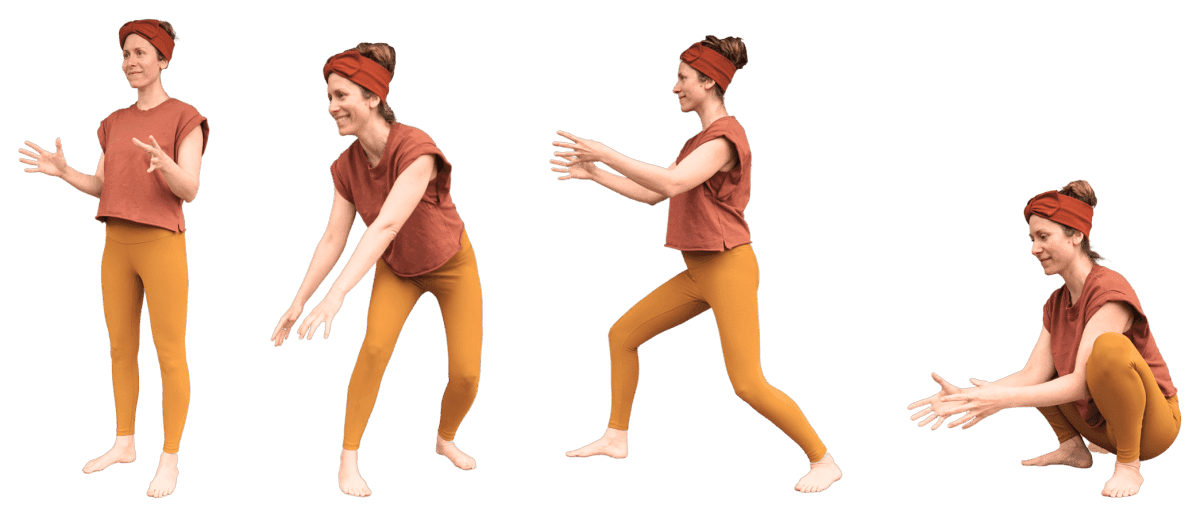
Left to right: Mountain, Goddess, Warrior I and Squat Stance.
Mountain Stance: feet hip-width apart or a little wider, for standing and balancing poses.
Goddess Stance: feet wide, knees bent, hips back and core on, for example to draw the hips back in Down Dog.
Warrior I Stance: feet staggered for lunges and warriors, when only one of your feet fits close to your student.
Squat Stance: low and light, for seated poses and Savasana.
Six hand positions
Whatever you do, use “liquid hands”: soft and responsive, never grabbing.
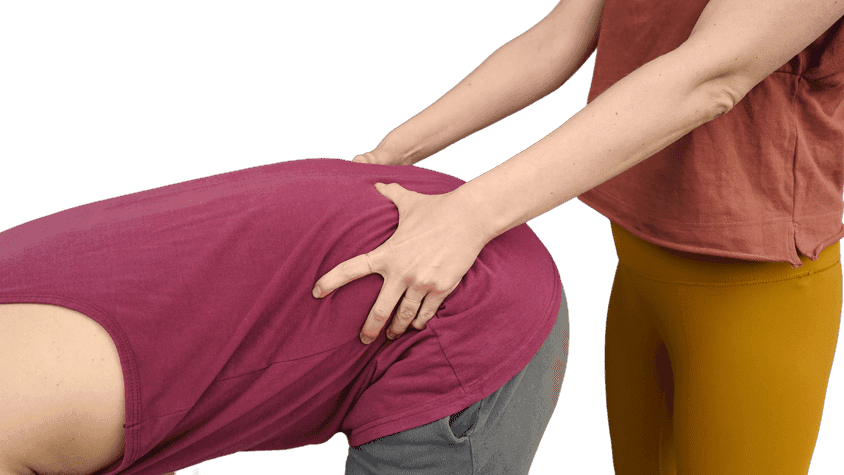
Handles
Handles wrap around the back of the pelvis, thumbs toward the sacrum, to guide pelvic tilt or steady the hips in balance poses.
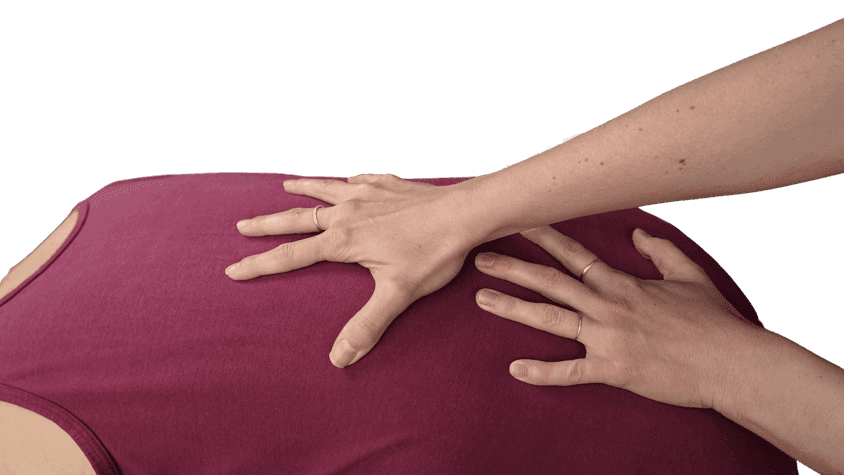
Open Palm Slide
An Open Palm Slide guides the spine toward neutral or moves the shoulder blades in a twist.
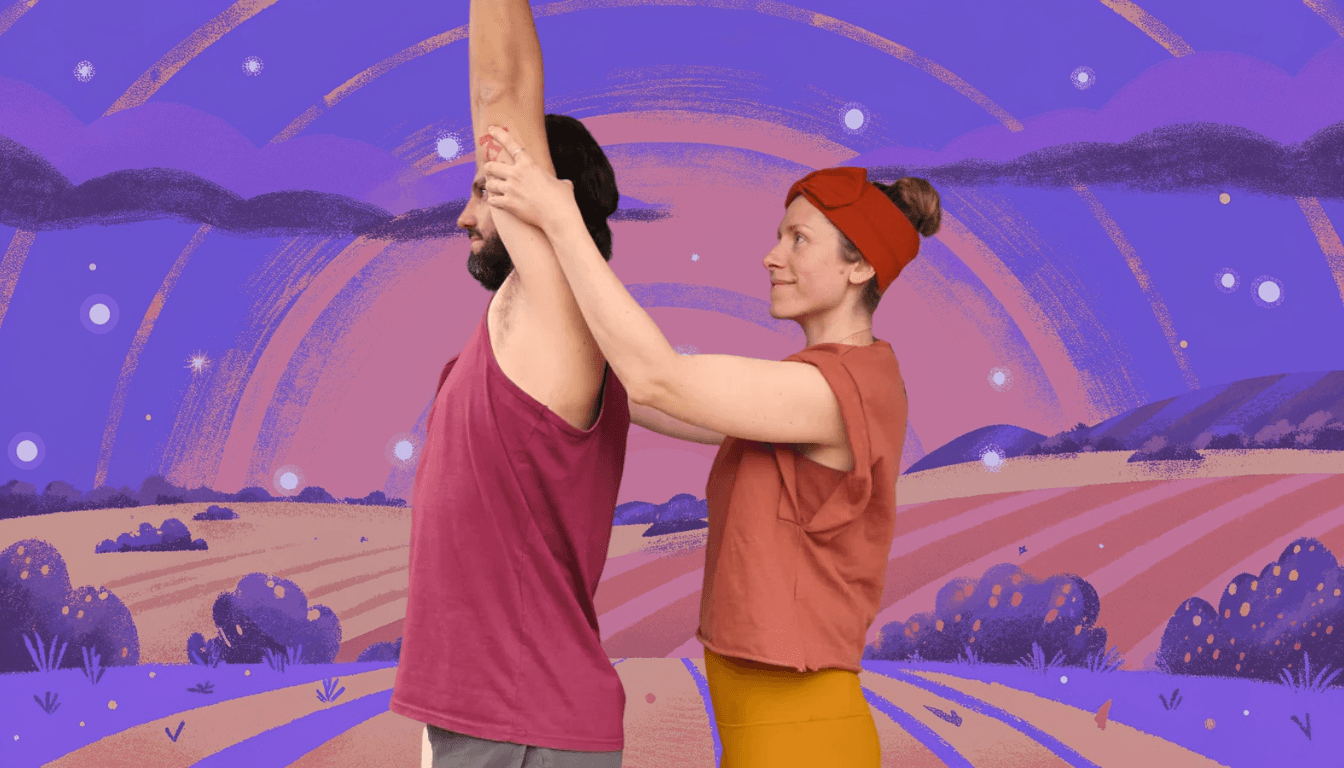
A Hand Clasp cups a bone, usually the upper arm, to rotate it outward (that’s the assist in the photo at the top of this lesson) or lift it away from the mat in Down Dog.
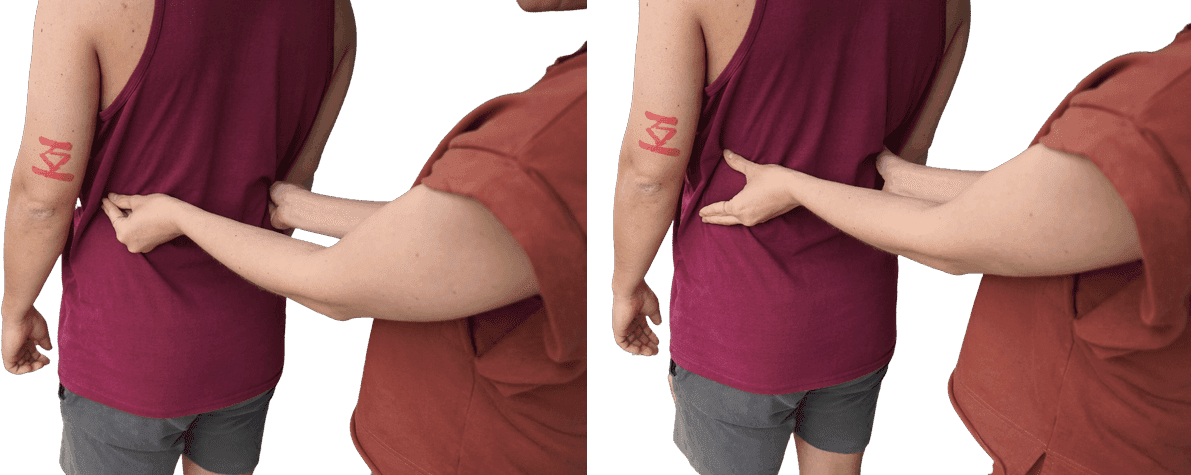
Finger Spread: start in a teardrop shape, then widen the fingers.
A Finger Spread starts in a teardrop shape and widens, so your student feels the ribs lift away from the hips.
Open Hands rest lightly on an area while you give the verbal cue, like your hands on the low ribs as you say “draw the ribs in and back.”
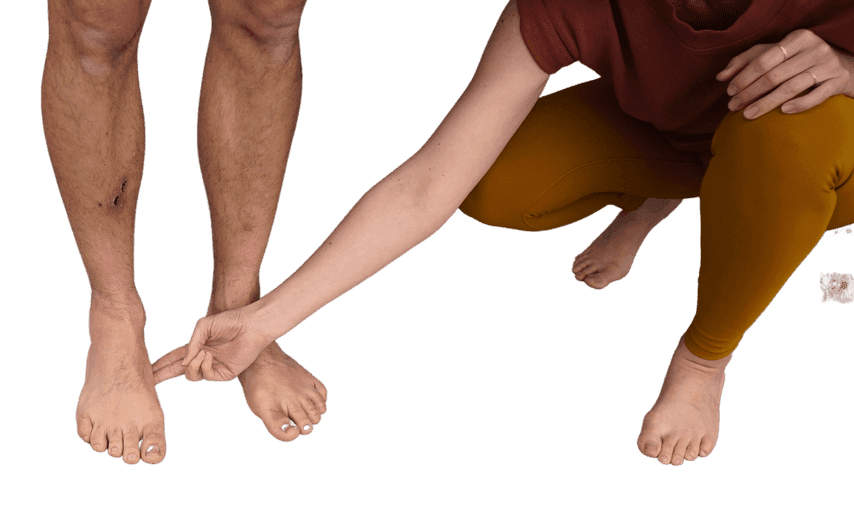
Finger Flicks
Finger Flicks are a gentle tap on the arch of the foot as you cue them to lift their toes. Their awareness goes to the arch, and they do the lifting.
Golden rules for hands-on assists
Look for the good first. Find what’s working before anything else.
Breathe with your student. Take a round of breath together first. If their breath gets choppy or stops, guide them out gently.
Say what you’re doing. “Tilt your pelvis forward,” as your thumbs guide the pelvis.
Do less rather than more. Start them in the right direction and let them finish the action.
Stay away from the joints. Never press a student’s knees toward the floor in a seated hip opener.
Never stand or sit on your student. Ever. Yes, believe it or not, this happens!
Keep your intentions impeccable. Gentle enough to do no harm, firm enough that it’s clearly not sensual. No stroking, petting or poking.
Leave high-risk students to verbal cues, including anyone with osteoporosis or who is pregnant.
Check they’re stable before you let go. Students often lean into you.
Assist both sides, and spread your assists across the whole class, not just the obvious beginners.
Consent is ongoing
The Yoga Alliance Code of Conduct, worth following whether you’re registered or not, asks for explicit and informed consent before any physical assist. Silence or a lack of resistance is not consent, and previous consent doesn’t imply future permission.
Learn it with your hands
There’s only so much you can learn about touch from reading. In the full Observation & Assists workshop, part of our 200-Hour YTT, I take you through consent and theory first, then step by step through assists for Tadasana, forward folds, Down Dog, backbends, twists, seated poses and Savasana, so you can practice with a partner at home.