Practical tips, helpful resources, important updates and personal reflections from Jess Rose & Company

12 Reasons Why Movement Wisdom Is The Only 200 Hour Yoga Teacher Training You'll Ever Need

4 Ways to Level Up Your Yoga Practice Beyond Poses
The Simple 5-Step Framework For Choosing Your Yoga Teacher Training
6 Creative Low Lunge Variations To Mix Things Up

7 Mistakes to Avoid When Choosing Your 200 Hour YTT + Free Podcast Workshop
Why Your Anxiety, Not Weak Arms, Blocks Your Arm Balances

Why Your Arm Anatomy Determines Optimal Hand Placement in Every Yoga Pose

The Bhagavad Gita Story: Why This Ancient War Text Became Yoga's Most Popular Teaching

Can You Actually Make Money Teaching Yoga? 7 Reasons Why It's More Viable Than You Think
From Yang to Yin: How the Same Shape Creates Completely Different Effects in Your Body

How To Evaluate A Yoga Teacher: The 11-Point Scorecard

Kapalabhati Pranayama: The Breath That Makes Your Brain Shine (Literally)

Loving Kindness Meditation: A Buddhist Practice That Rewires Your Stress Response
Online vs. In-Person Yoga Teacher Training: Which Format Is Right for You?
Why Senior Yoga Training Is Essential for Modern Yoga Teachers

The Top 5 Common Concerns Before Starting Your 200-Hour Yoga Teacher Training

What Ahimsa Really Means: Beyond Vegetarianism to True Non-Harming
What Your Yoga Students Actually Notice (And What They Don't)
Why Prenatal Yoga Is Different From Every Other Safe Pregnancy Exercise
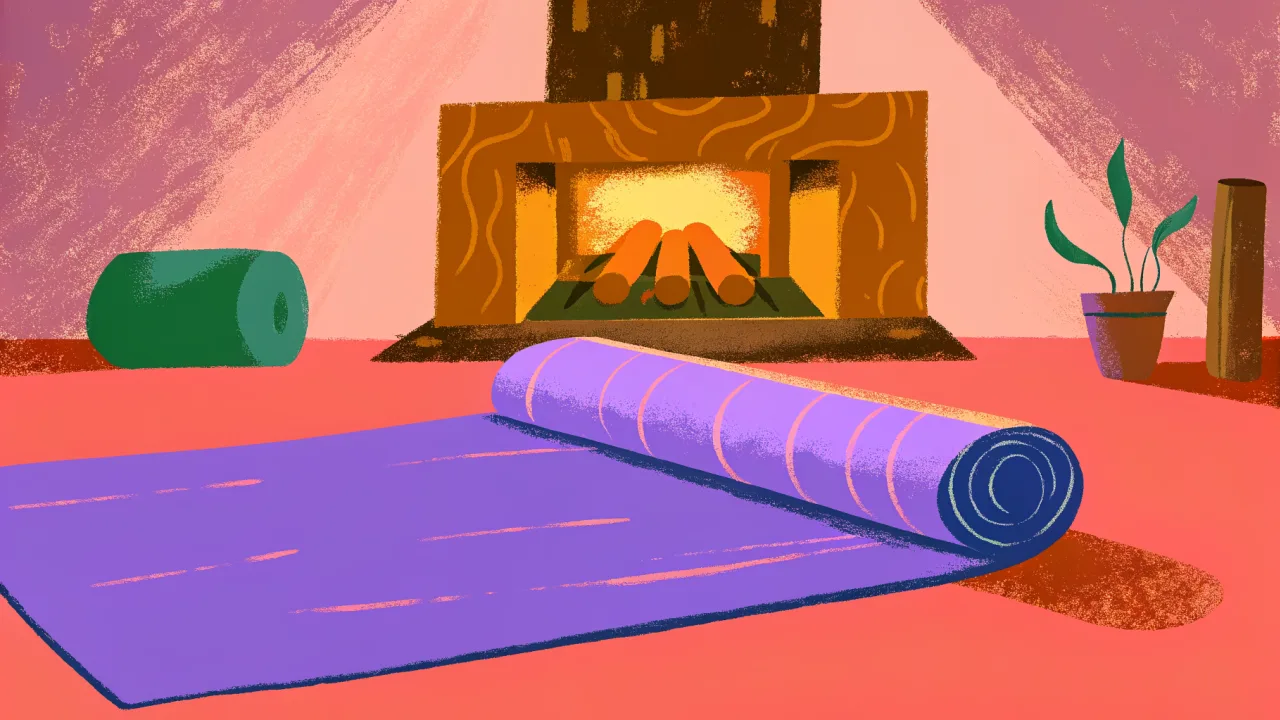
How to Create the Perfect Space for Winter Restorative Yoga Practice

You Don't Have to Believe in Energy to Feel It
Open Spots Available. Save $100 Now
Finding a teacher you trust with your yoga education is critical. This VIP ticket lets you look behind the scenes and make sure that Jess is the right teacher for you.
Includes promotional content and training updates. Privacy Policy
$100
Movement Wisdom
Gift Card
200 Hour YTT

Limited Time Offer
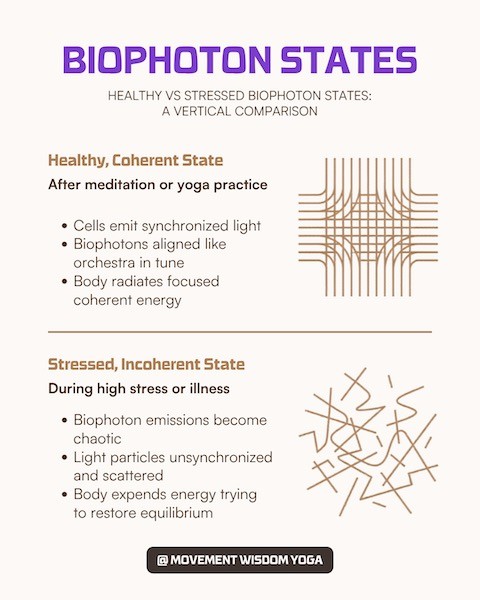
You're literally made of light (science confirms it)
If you've ever sat in a yoga class and been asked to 'feel your prana' or 'bring awareness to your heart chakra' and thought... what does that even mean — this one's for you.
I've been teaching yoga for years, and some of the most common questions I get from students, especially those with a more scientific or analytical mindset, are about subtle energy.
Do I have to believe in it?
Is any of this actually real?
Can I still get the benefits of subtle energy even if I'm skeptical?
The answer to all three is yes. And I wrote this article to show you why.
It turns out the science is a lot more interesting than most yoga teachers let on.
We're talking about measurable electromagnetic fields radiating from your heart, living cells that emit actual light, nerve clusters that map almost exactly onto ancient chakra locations, and a quantum physics experiment so strange that even physicists struggle to explain it.
You don't have to believe in any of it. You just have to be curious enough to try.
Come have a read.
🙂
The Takeaway
Your body is doing extraordinary things - generating electromagnetic fields, emitting light at the cellular level, existing as both matter and a wave of pure potential. You don't need to believe in subtle energy, but you probably will experience it if you let yourself pay attention to it.

You Don't Have to Believe in Energy to Feel It
Can You Actually Make Money Teaching Yoga?
With millions of free yoga classes available online and tens of thousands of people taking yoga teacher trainings all around the world, you may be wondering if it's a good idea to become a professional yoga teacher.
I believe that teaching yoga is more financially viable than most people think. Here's why.
The market is massive. Yoga is a $100 billion global industry! More than 50 million people practice yoga regularly, in the US alone! Doctors and other healthcare providers are recommending yoga more and more because science now backs up all the incredible benefits of yoga for body, mind and soul. Aka. there's huge demand. The barrier to entry is incredibly low. You can get certified for under $1,000 and start teaching part-time without quitting your day job. Compare that to law or medicine requiring tens of thousands of dollars and years of training. You can test the waters risk-free. There's less competition than you'd expect. Fewer than 10% of certified yoga teachers actually teach professionally. Most trainings don't build real teaching skills, so graduates lack confidence. If you get solid training and put yourself out there, opportunities open up. Your career is AI-proof. Right now AI can't even create accurate images of yoga poses. And the sequences it creates are super generic. But even if AI gets really good at teaching yoga ... human yoga teachers (at least the good ones) are irreplaceable because yoga is not just functional movement. It's a profound human experience. And that's something AI can fake, but not create. You can specialize and diversify. Beyond studio classes, you can teach corporate yoga, lead retreats, offer private sessions ($100+ per hour), or work with specific populations like athletes or seniors.
So the real question isn't "Can I make money teaching yoga?" It's "Am I willing to invest in becoming the kind of teacher people seek out?" If your answer is yes ... then don't let fear hold you back.
The Takeaway
Teaching yoga is more financially viable than you think because the market is huge, barriers are low, competition is limited, and the work is AI-proof.
Can You Actually Make Money Teaching Yoga? 7 Reasons Why It's More Viable Than You Think
Same Pose, Opposite Effects: Yin vs Yang
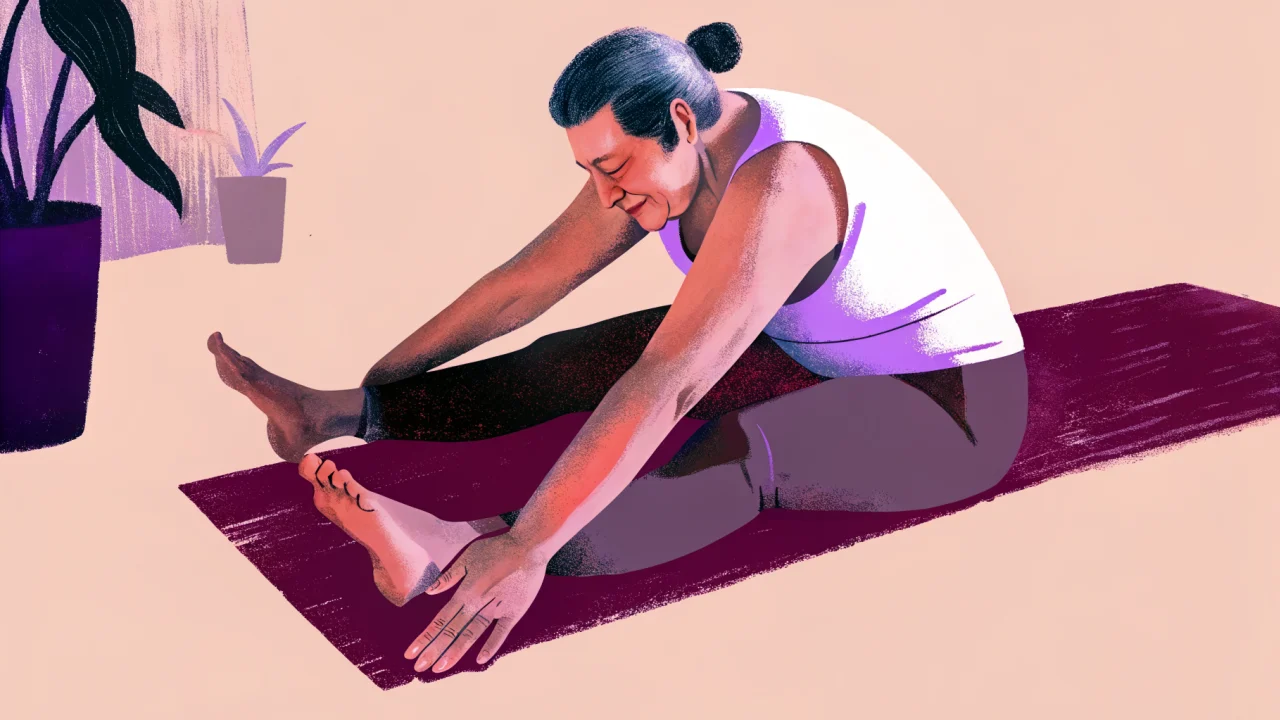
Place one leg straight, bend the other with your foot against your inner thigh, and fold forward. It's a shape you've probably seen — and maybe done — dozens of times.
But here's something fascinating: depending on how you approach it, you're actually doing two entirely different practices.
In active yoga (Vinyasa, Hatha), this pose is called Janu Sirsasana, or Head to Knee Pose; a beautifully engaged forward fold that strengthens muscles and builds heat. In Yin yoga, that very same shape becomes Half Butterfly, a completely passive pose that works to release fascia and gently calm your nervous system.
The difference comes down to one thing: muscular engagement.
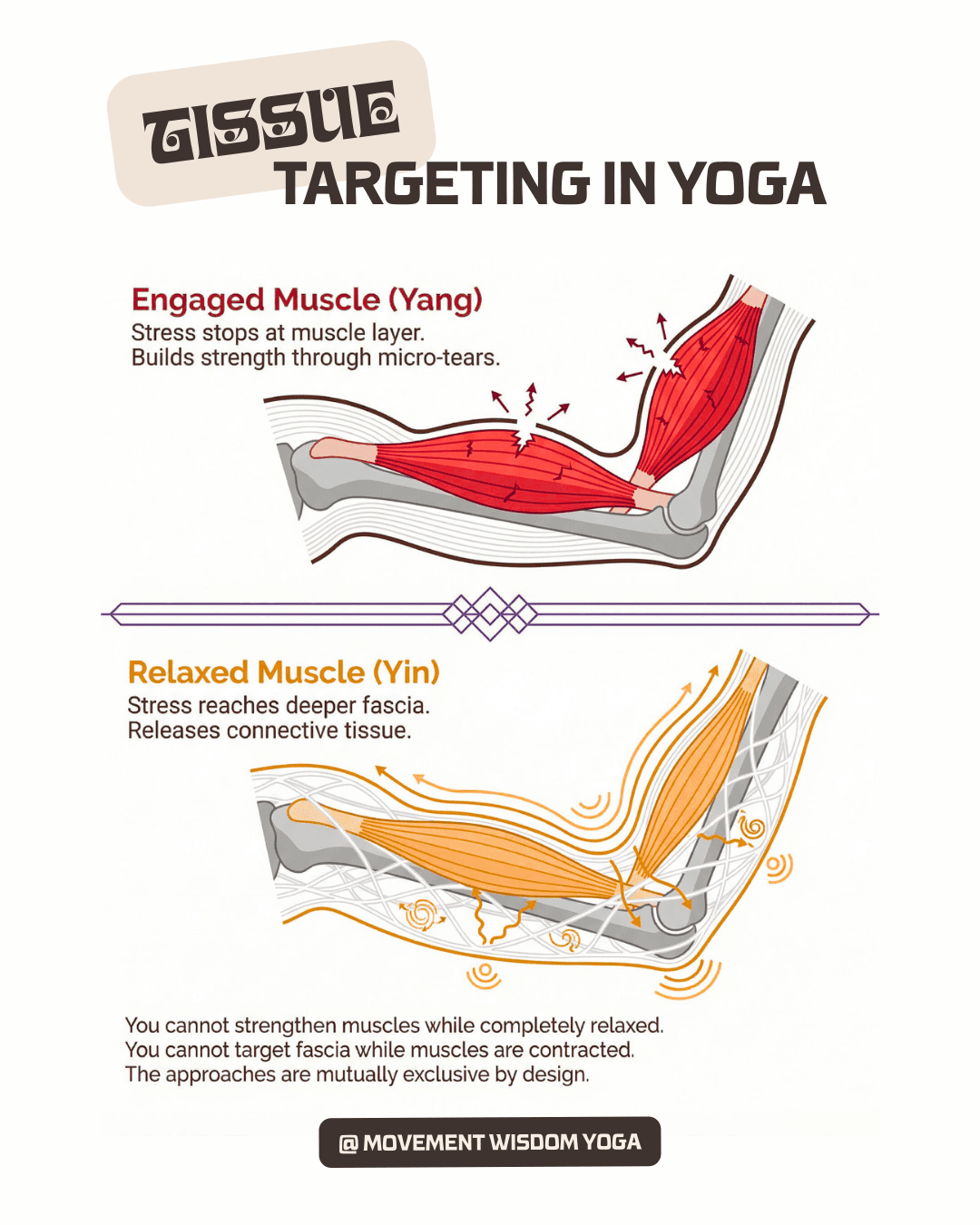
When your muscles actively contract, they become the primary tissue receiving positive stress. You're building strength, increasing circulation, and developing endurance. When your muscles fully relax, that stress bypasses them entirely, sinking deeper into your fascial layers, joint capsules, and connective tissue.
Here's a helpful way to picture it: imagine pressing on a stack of cushions. If the top cushion is hard and firm (muscles engaged), your hand never reaches the layers underneath. But if the top cushion is soft and deflated (muscles relaxed), you naturally sink through to the deeper layers.
Similarly, you can't effectively reach your deeper fascia while your muscles are contracted. And, on the flip side, you can't strengthen muscles while they're fully at rest. These two approaches are wonderfully complementary, but mutually exclusive by design.
Learning to move between active and passive styles of yoga is one of the most empowering things you can do for your practice. It transforms your time on the mat into truly intentional self-care, where you get to tune in and choose exactly what your body needs on any given day.
The Takeaway
The same yoga shape creates opposite effects depending on whether your muscles are engaged (strengthening) or completely relaxed (fascial release).
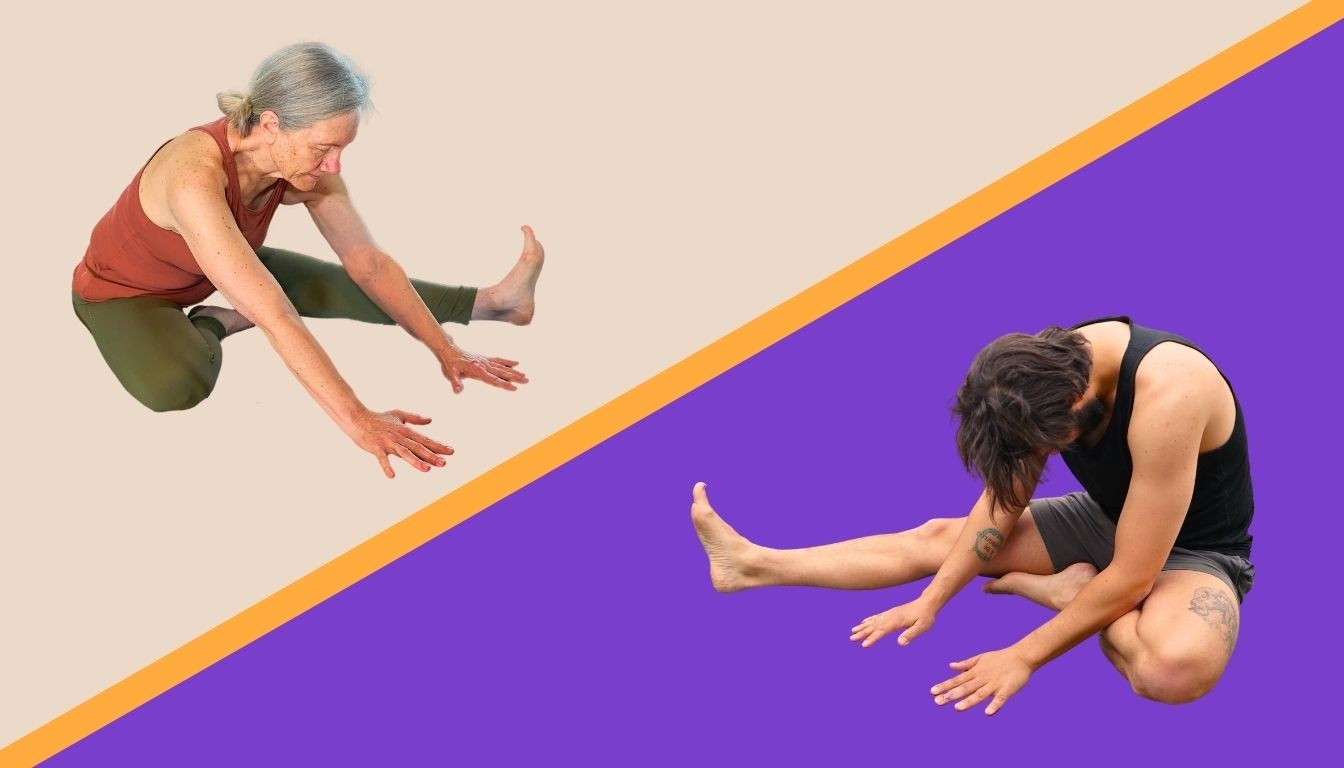
From Yang to Yin: How the Same Shape Creates Completely Different Effects in Your Body
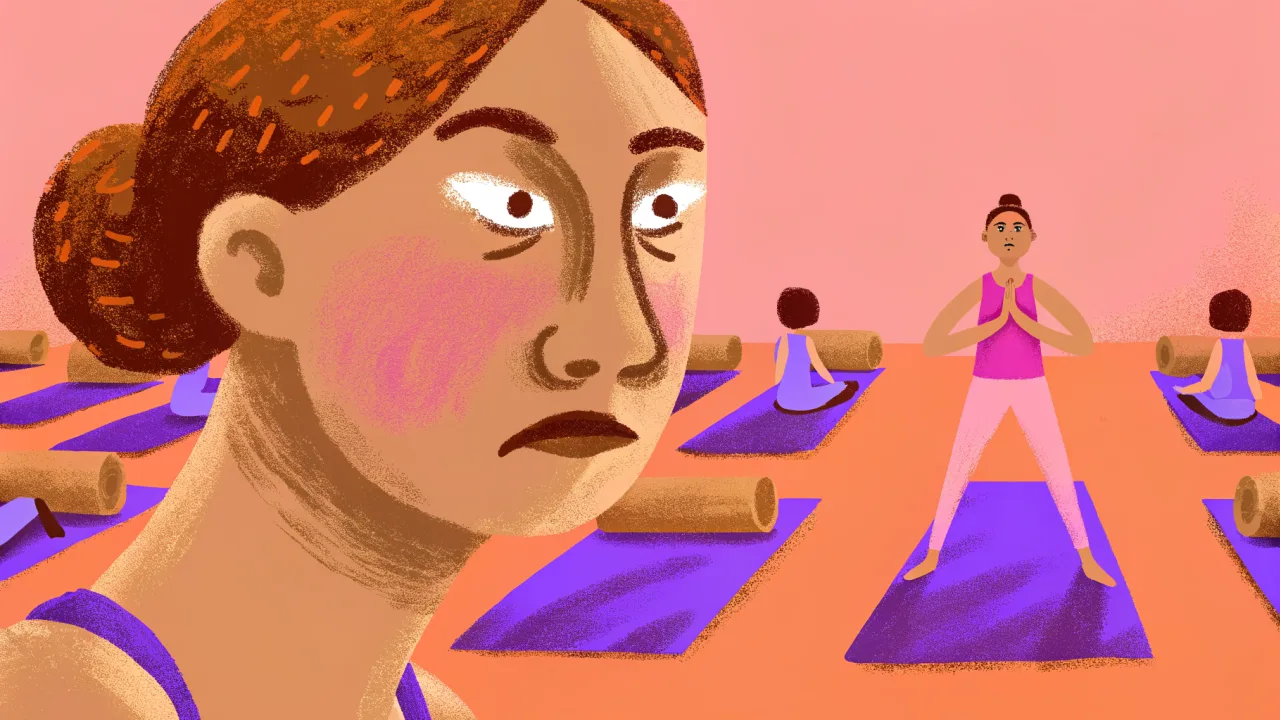
What Your Students Actually Notice (And What They Don't)
You think everyone can see your nervousness when you teach. Your heart races, your mind blanks, and you're convinced the whole room knows you're panicking.
But here's what's actually happening: students are completely absorbed in their own practice. They're not monitoring you at all.
The gap between your internal experience and their perception is massive. You feel like you're dying inside as you struggle to remember what you just taught on side 1 of your flow, but to them, you just look like a teacher pausing thoughtfully before the next cue.
Most students won't even notice if you:
• Forget what you taught on the first side
• Mix up your planned sequence
• Skip a pose entirely
• Take longer pauses than you intended
They lack the reference point of your planned class. They assume whatever you're teaching is intentional.
The exception? Veteran yoga teachers in your class might catch mistakes. But regular practitioners are grateful for any guidance and focused entirely on what's happening on their own mat.
This misunderstanding drives most teaching anxiety. You're worried about a performance that probably no one is watching. Students came to practice yoga and feel something, not to audit your teaching or confidence level.
When you teach, your job isn't to appear perfect. Your job is to hold space and deliver clear guidance while students do their internal work. They're watching their own movie, not yours.
The Takeaway
Students are absorbed in their own practice and cannot detect your internal nervousness. They probably won't notice all the little things you "messed up." And even if they do notice a small thing here or there, they probably don't care. The uncertainty that comes with standing in front of a group of strangers and giving instructions is real. But all the weight you attach to your performance is unwarranted. Be the vessel for yoga to flow through, and you will do just fine. :)
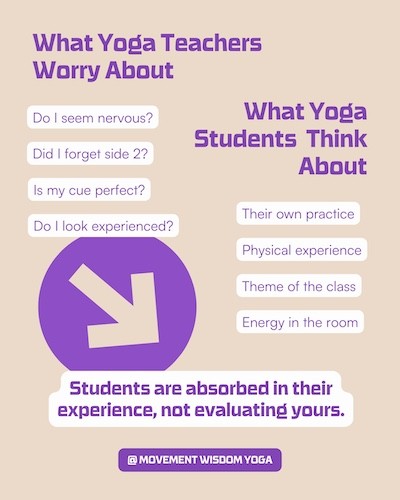

What Your Yoga Students Actually Notice (And What They Don't)
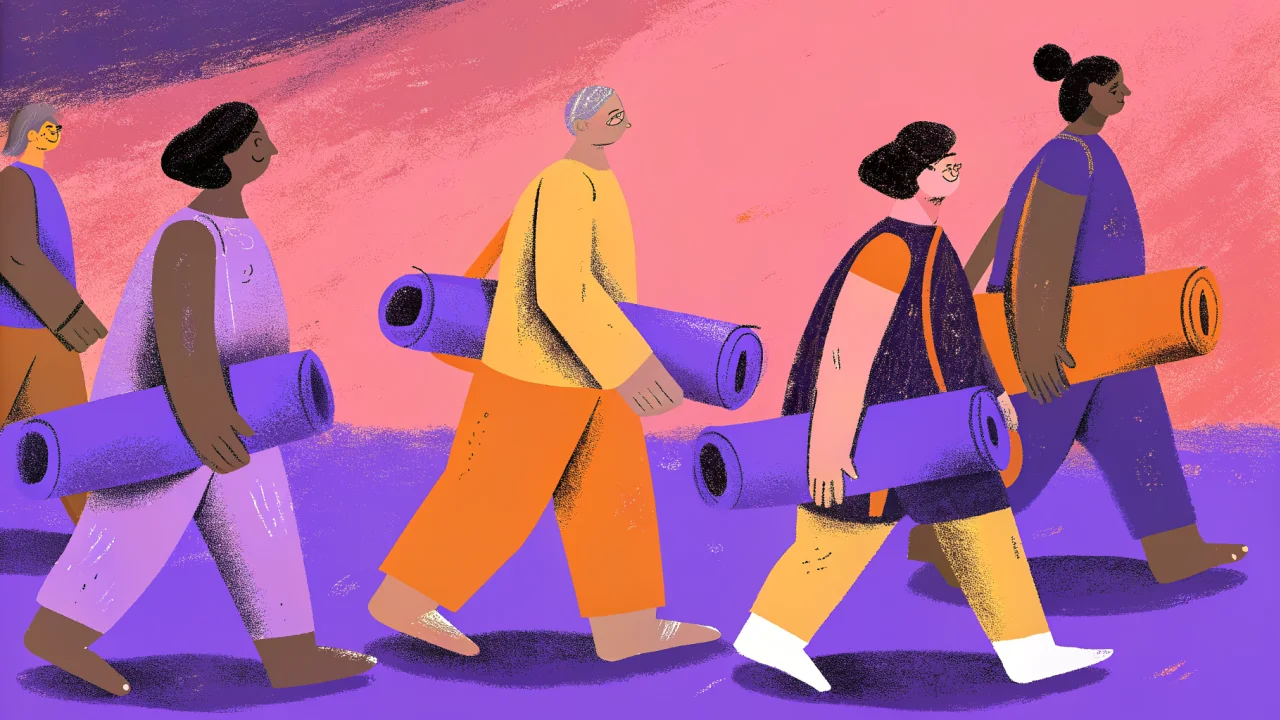
Why You Can't Trust Google or ChatGPT for Senior Yoga Advice
This is the hardest teaching scenario for a yoga teacher: You scan the room. Three students are in their sixties, two are in their seventies. One mentions osteoporosis. Another asks if the class is safe for high blood pressure.
Your mind races: What poses should they avoid? Can they do breathwork? Is Downdog safe?
So you do what most teachers do - you Google it or ChatGPT it after class, right?
Here's the problem: The internet is full of dangerous recommendations for older students. But most people don't know it's bad advice!
Shoulder Stand appears on countless "safe poses for seniors" lists. But it spikes blood pressure and puts the neck in extreme flexion, which is exactly what you want to avoid for anyone with osteoporosis, heart conditions or stroke risk.
And teaching older students isn't just about using props or modifications. You can cue bent knees and offer blocks all day, but that still might not = safe. What matters is knowing which styles of yoga, which specific poses, and which breathwork practices to leave out entirely.
It's also not just about making things easier. Older students want challenge, creativity, and variety. They get bored with the same ten gentle poses every class.
The solution requires moving beyond random blog posts to actual research - understanding how aging affects all body systems, not just creaky joints. Understanding common issues with the heart, the bones, blood flow, and how the body works and changes in older years is key in teaching older students in a safe way.
And learning the "why" or "why not" behind every single pose you teach (or avoid) gives you total confidence in your teaching, which leads to a fulfilling career and practice as you get older, too.
The Takeaway
Safe teaching for older students isn't about what props you use. Instead, it's about knowing which practices to exclude entirely, and you can't trust everything you read on the internet.
Why Senior Yoga Training Is Essential for Modern Yoga Teachers
Why Fear, Not Weak Arms, Blocks Your Arm Balances
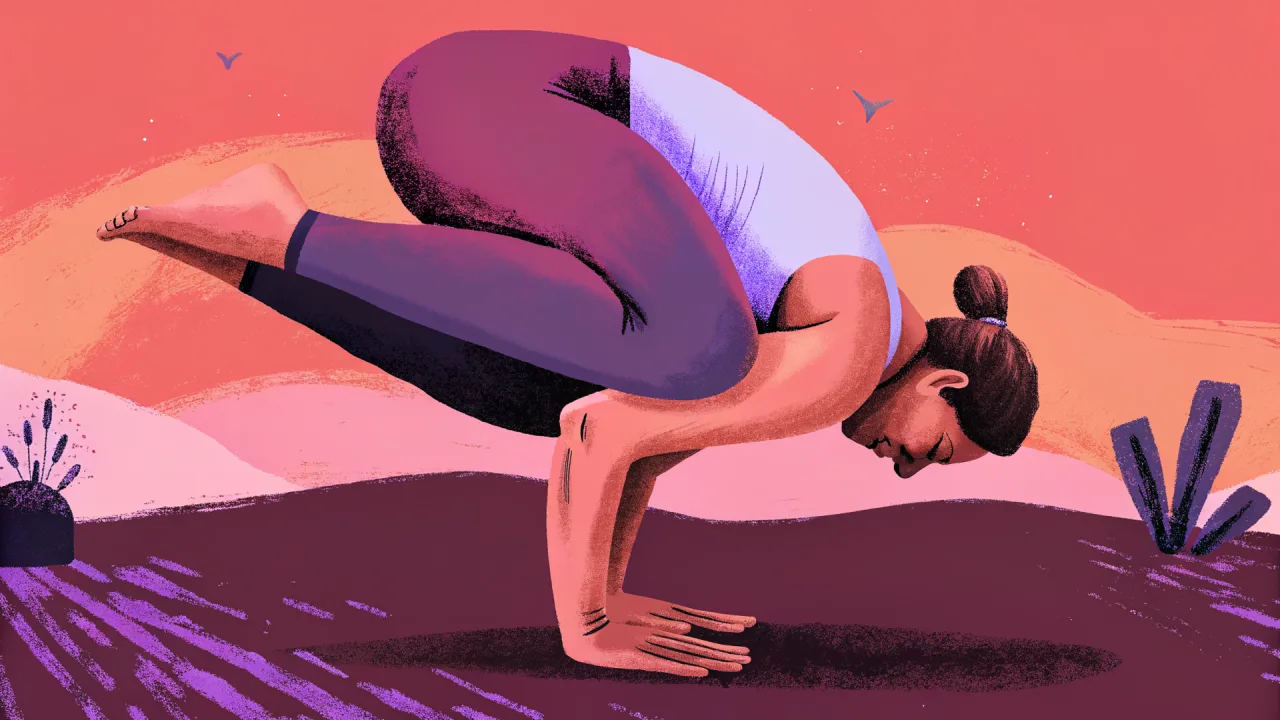
If you can hold Downward Dog for 10 breaths, I'm 99% certain that you have enough strength for Crow Pose.
So why won't your feet leave the ground?
So many of my students blame something physical - tight hamstrings, a weak core, weak shoulders. However, I think most people are strong and flexible enough for the arm balances that challenge them. I believe it's fear that's stopping them. And there's some research to back this idea up.
For example, research on rock climbers found that anxious climbers perceived routes as harder and experienced measurably higher muscle fatigue than fearless climbers. It's not because they lacked strength, but because their nervous system was operating in a fear state and their brain was telling them they couldn't do it.
Well, the same thing happens in arm balances. Your brain creates predictions about what you can and cannot do, then bases your performance on that prediction. When you believe you can't do the pose, your fight-or-flight response ramps up and changes your performance. So you might be able to hold Plank for 10 or even 30 seconds, but as soon as you fear falling on your face, all of a sudden your arms go weak, your muscles fatigue, and you give up and say you're not strong enough.
Here's proof it's not about strength: If you can hover in that 'almost there' of a pose for even 2-3 seconds, you're probably strong enough. Hovering actually requires more muscular effort than the full pose.
The solution to the fear issue is to train your nervous system the same way exposure therapy works for phobias. Take baby steps until your nervous system feels safe enough to go for it.
One technique that works well for my students is called 'Finger Brakes':
• In Tabletop position, lean forward until you press into your fingernails (they'll turn lighter)
• Rock back and forth into and out of your fingernail brakes
• Once comfortable, try it in Plank
• Then take it to Crow
This technique teaches your brain that your hands can catch you - they can stop you from face-planting. That one mindset shift goes further to getting you into arm balances way faster than any amount of core work will. You're welcome! ;)
The Takeaway
If you can hover in an arm balance setup for a few seconds, you have the strength. What you need is to build trust in your foundation through repeated, controlled exposure.
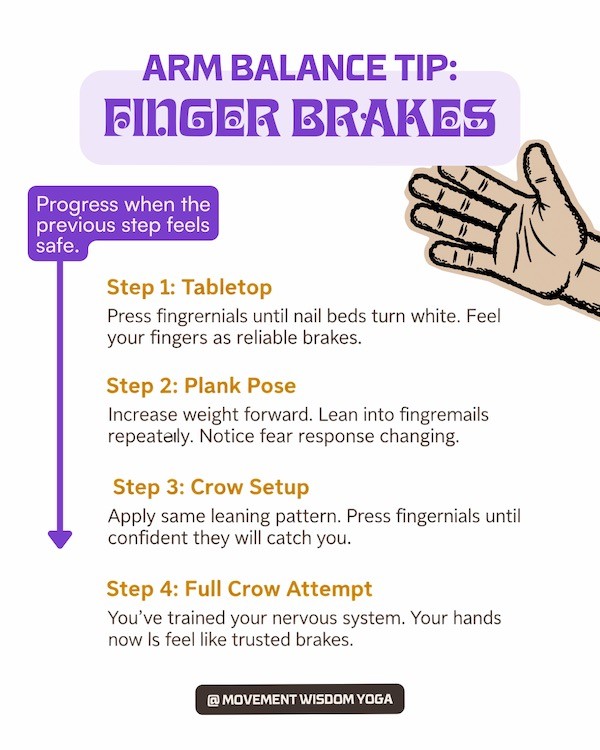

Why Your Anxiety, Not Weak Arms, Blocks Your Arm Balances
Why Your Body Can't Relax When You're Cold During Restorative Yoga
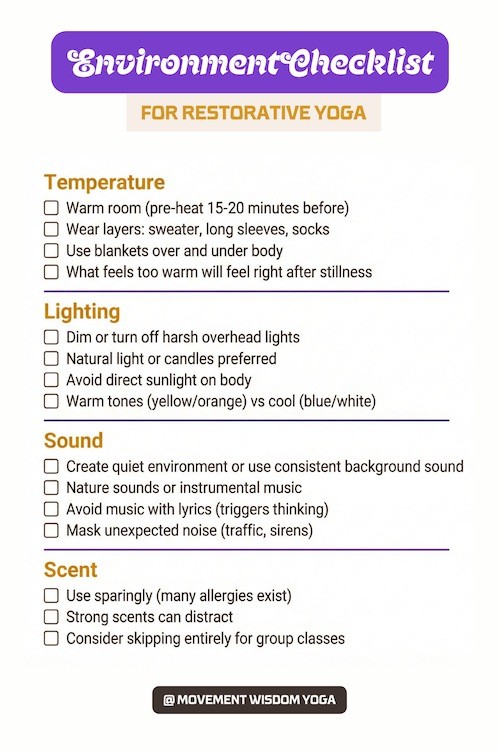
Cold muscles tense up to generate heat. It's an automatic survival response your body can't override through willpower.
This is why temperature matters so much in restorative yoga. Even slight muscular tension from being cold defeats the entire purpose of the practice - getting into your parasympathetic (rest-and-digest) state.
The problem: When muscles contract to create warmth, your sympathetic nervous system ramps up. Your body literally can't relax when it feels cold, no matter how hard you try (unless your Wim Hof!).
In active yoga styles like Vinyasa Flow, movement generates internal heat so muscles can easily release in the more passive poses, like Savasana at the end of class. But in restorative practice, you're holding still pretty much the entire time. Any tension in your muscles, even from being mildly cold, keeps you stuck in fight-or-flight mode.
What to do:
• Layer aggressively: fuzzy sweaters, long sleeves, multiple pairs of socks, and even hats and gloves in winter if you're like me! :)
• Use blankets strategically: one under your body, one over it
• Preheat your practice space 15-20 minutes before you begin
• What feels slightly too warm at the start will feel right after a few minutes of stillness
If you're teaching restorative classes, set the studio temperature 3-5 degrees warmer than you would for active classes.
Environmental design isn't separate from restorative yoga practice. It's a foundational part of it. Your nervous system reacts to cold the same way it reacts to danger, with protective tension throughout your body and mind.
The Takeaway
Your body can't override its survival response to cold, so warmth isn't a luxury in restorative yoga, it's a requirement for the nervous system to actually relax.

How to Create the Perfect Space for Winter Restorative Yoga Practice
Why a War Story Became Yoga's Most Popular Teaching
Before the Bhagavad Gita, yoga was for renunciants.
You meditated in caves, withdrew from society, gave up your job and family. To be a "real" yogi meant leaving the world behind.
The Gita smashed that model completely.
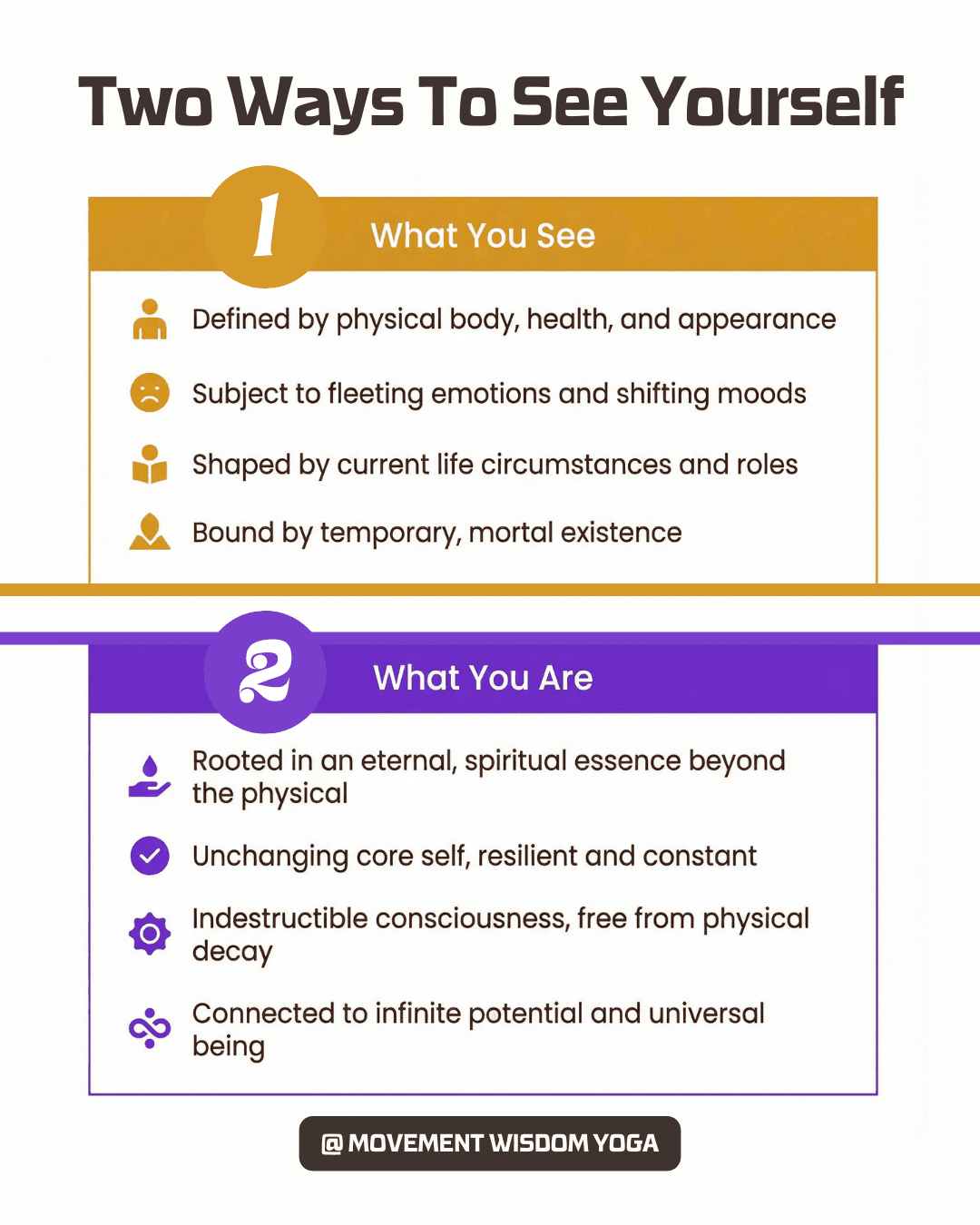
In the story, warrior Arjuna refuses to fight because he'd have to kill his teachers, grandfather, and cousins. He wants to run away. But Krishna, his charioteer, powerful god, and mentor, doesn't tell him to go meditate in the forest.
He tells Arjuna to stay exactly where he is, in the middle of the chaos, with all his responsibilities, facing his hardest challenge. And that can be his yoga.
This was revolutionary. The Gita taught that you can reach enlightenment through action in the world, not just meditation in isolation.
You don't have to drop everything and become a hermit. You can have a house, a job, a family, and still follow a yogic path. You can find liberation on the battlefield of your actual life.
This made yoga accessible to ordinary people living ordinary lives: parents, workers, anyone with responsibilities and relationships.
That's why the Gita endures 2,000+ years later. It meets you where you are, in the midst of your messy life, and shows you that this, right here, right now, can be your path to freedom.
The Takeaway
You don't need to retreat from the world to practice yoga. Your messy, ordinary life with all its responsibilities can be your path to enlightenment.

The Bhagavad Gita Story: Why This Ancient War Text Became Yoga's Most Popular Teaching
Perfection isn't the point
You've probably heard that ahimsa means non-violence or non-harming.
What's the first example of non-harming that comes to your mind?
If you're like 99% of yoga students, your thoughts jumped straight to "meat vs. no meat".
Do you eat meat (causing harm to animals), or not..?
This is an interesting discussion to have, and it comes up almost every couple of weeks in the Movement Wisdom Yoga Teacher Training.
But a lot of my students are surprised to learn that there's more to ahimsa than just being a vegetarian or not.
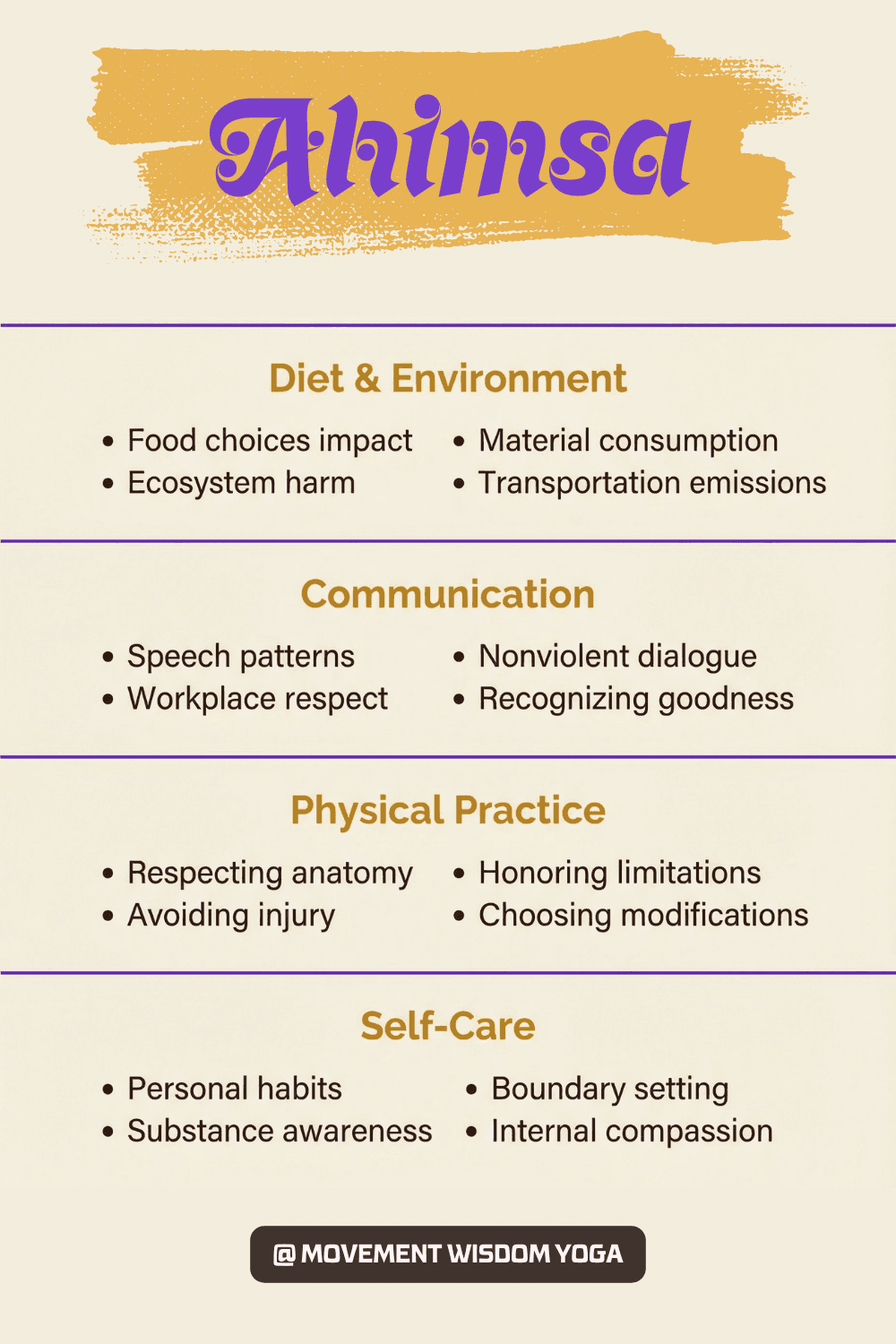
More ways to practice ahimsa
There are many ways to practice ahimsa in your life and on the yoga mat.
How you talk to other people, for example..? Especially people who push your buttons, or those who you might take for granted?
How do you talk to yourself..?
Are you able to swallow the hurtful comments that are on the tip of your tongue or that you say to yourself on repeat?
And how do you treat yourself? Do you take care of yourself? Do you have habits that you know to be harmful?
Do you push yourself to the point of injury in your yoga practice? Or do you respect your limitations?
Ahimsa, if you let it, extends to all aspects of life, not just what's on your plate.
It's not about being perfect
The other important aspect of ahimsa that doesn't get enough attention is that, when Patanjali put it into the Yoga Sutras, he never said explicitly how to practice it.
Which means, that if you have ever crossed paths with anyone in the 'yoga police,' telling you that you are not practicing ahimsa with some of the actions in your life, just know that there are no set rules and definitions of ahimsa.
What feels like non-harming to me might not feel like non-harming to you.
And I think it's important to point out that living without harming other beings or the planet is straight up impossible.
Scientists now believe that plants are conscious ... with that in mind, what are we yogis supposed to eat without causing harm..?!
A gazillion creatures died or had to flee their home to build the house that you now live in.
We humans cause harm in so many ways, even when we don't try. Animals do it, too, though. Bacteria as well. It's just a part of nature, whether we like it or not.
I think ahimsa should be understood as conscious awareness.
As a practice of recognizing how we fit into nature, while doing our best to respect other creatures around us.
But knowing that there is no way to live without causing any harm.
And also - not policing others based on our own personal views of ahimsa is a very yogic stance to take, too.
The best way to bring ahimsa into your life might be to examine the consequences of your actions. To realize when you're causing harm and to look for ways to reduce (not eliminate) the damage that you cause.
The Takeaway
Ahimsa is one of the most commonly talked-about concepts from the Yoga Sutras. And in some yoga circles, there is a lot of 'ahimsa policing' and judging others' behavior going on. Non-harming is a broad practice, and is about awareness and intention in all areas of life - not just about vegetarianism. And although it would be amazing, none of us is able to live in a way that causes no harm to other creatures or the planet.

What Ahimsa Really Means: Beyond Vegetarianism to True Non-Harming
Inspiration to level up your practice
Most people think leveling up their yoga practice means nailing more advanced poses, and that's of course a pretty fun thing to do. But there is more than one way to advance your practice meaningfully. Here are 4 ideas that go beyond just 'getting better at asana.'
1. Understand your unique anatomy
Every body is different. We have different bone structures, joint mobility, and proportions. Instead of forcing yourself into some idealized shape you saw on social media, spend time understanding YOUR body. Notice what feels accessible and what doesn't. When you work with your anatomy instead of against it, everything changes.
2. Try new styles
Stuck in a Vinyasa rut? Try Yin Yoga and discover what stillness and passivity can do for you. Always doing gentle practices? Challenge yourself with Hatha or Vinyasa Flow. Different styles reveal different aspects and shake you out of autopilot. Practicing both strong styles of yoga as well as gentle ones keep us in harmony with our true nature. Practicing both yin and yang styles of yoga also tends to show you how your daily life needs more yin/yang balance, too.
3. Go beyond stretching
Yoga isn't just the poses. The original meaning of 'asana' (what we call the yoga poses, in English) was simply 'the proper seat for meditation.' Explore meditation, breathwork, or chanting mantra. These practices offer benefits for mind, heart, and nervous system that stretching alone can't easily provide.
4. Live like a yogi
The yogic mindset is what separates yoga from all other physical activities. The classic texts (Bhagavad Gita, Yoga Sutras, Upanishads) contain profound wisdom for modern life. They help us take a step back, broaden our focus, and see just how full of possibility we are. Find a good teacher or commentary to help translate them, and they'll offer practical guidance for everything from handling stress to understanding your own mind.
The Takeaway
Real growth in yoga isn't always about doing more advanced poses. Sometimes it's about going deeper into the unseen parts of this very multi-faceted practice.

4 Ways to Level Up Your Yoga Practice Beyond Poses