Free yoga classes, hard-to-find insights, and personal reflections from Jess Rose & Company.
Why Your Body Can't Relax When You're Cold During Restorative Yoga
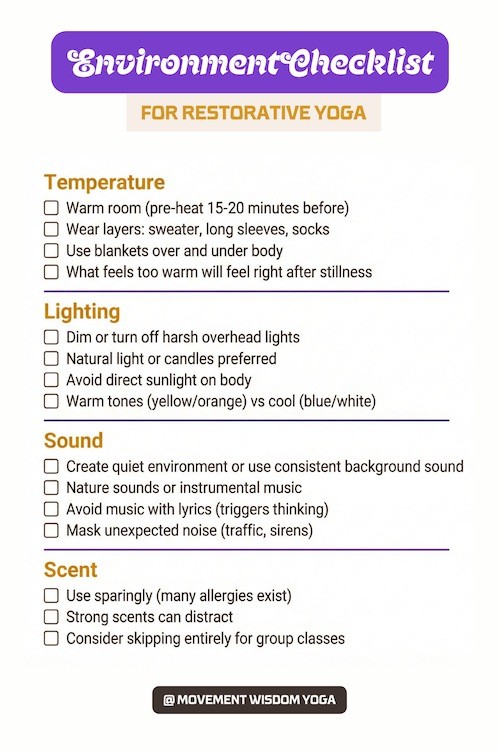
Cold muscles tense up to generate heat. It's an automatic survival response your body can't override through willpower.
This is why temperature matters so much in restorative yoga. Even slight muscular tension from being cold defeats the entire purpose of the practice - getting into your parasympathetic (rest-and-digest) state.
The problem: When muscles contract to create warmth, your sympathetic nervous system ramps up. Your body literally can't relax when it feels cold, no matter how hard you try (unless your Wim Hof!).
In active yoga styles like Vinyasa Flow, movement generates internal heat so muscles can easily release in the more passive poses, like Savasana at the end of class. But in restorative practice, you're holding still pretty much the entire time. Any tension in your muscles, even from being mildly cold, keeps you stuck in fight-or-flight mode.
What to do:
• Layer aggressively: fuzzy sweaters, long sleeves, multiple pairs of socks, and even hats and gloves in winter if you're like me! :)
• Use blankets strategically: one under your body, one over it
• Preheat your practice space 15-20 minutes before you begin
• What feels slightly too warm at the start will feel right after a few minutes of stillness
If you're teaching restorative classes, set the studio temperature 3-5 degrees warmer than you would for active classes.
Environmental design isn't separate from restorative yoga practice. It's a foundational part of it. Your nervous system reacts to cold the same way it reacts to danger, with protective tension throughout your body and mind.
The Takeaway
Your body can't override its survival response to cold, so warmth isn't a luxury in restorative yoga, it's a requirement for the nervous system to actually relax.

Why a War Story Became Yoga's Most Popular Teaching
Before the Bhagavad Gita, yoga was for renunciants.
You meditated in caves, withdrew from society, gave up your job and family. To be a "real" yogi meant leaving the world behind.
The Gita smashed that model completely.
In the story, warrior Arjuna refuses to fight because he'd have to kill his teachers, grandfather, and cousins. He wants to run away. But Krishna, his charioteer, powerful god, and mentor, doesn't tell him to go meditate in the forest.
He tells Arjuna to stay exactly where he is, in the middle of the chaos, with all his responsibilities, facing his hardest challenge. And that can be his yoga.
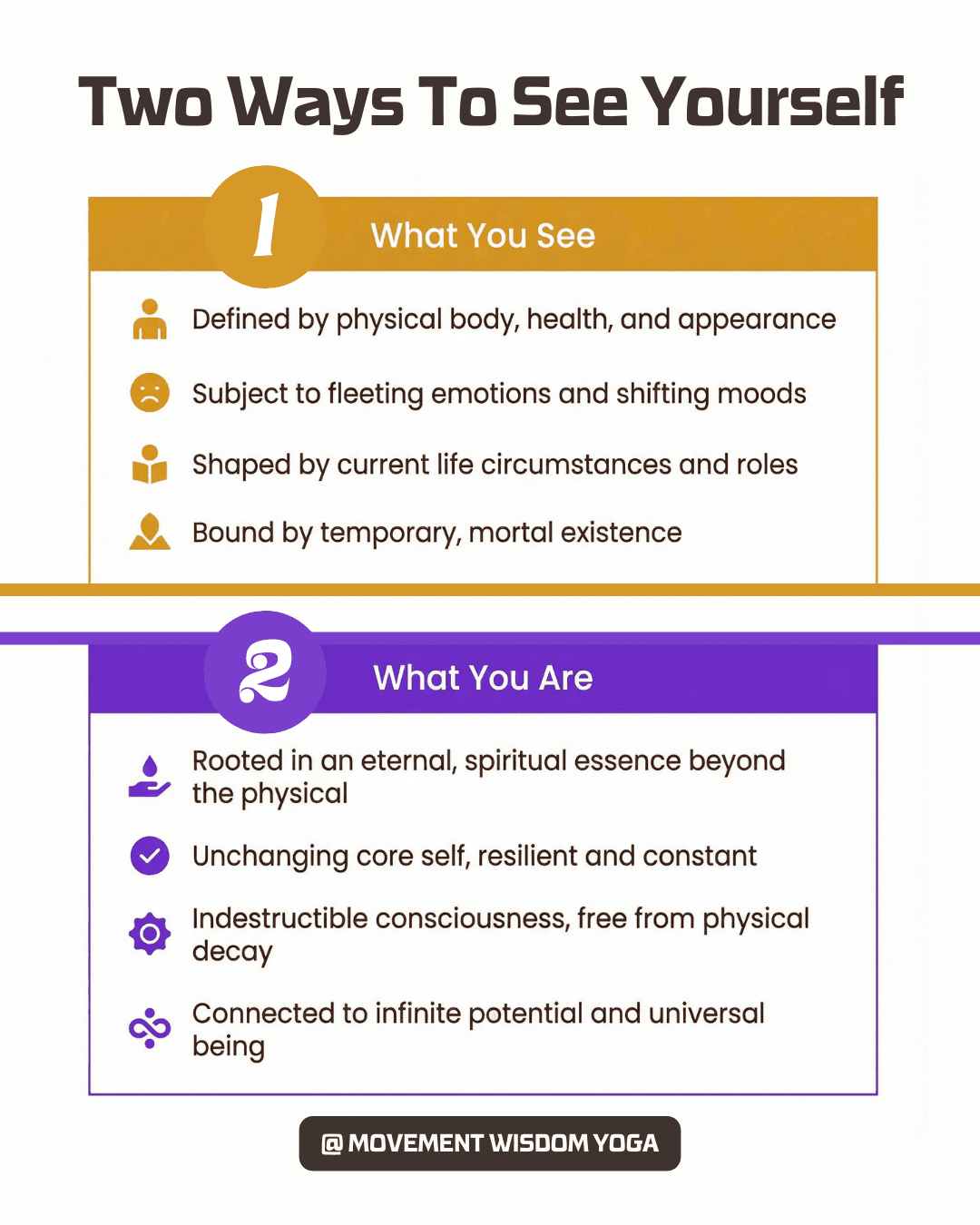
This was revolutionary. The Gita taught that you can reach enlightenment through action in the world, not just meditation in isolation.
You don't have to drop everything and become a hermit. You can have a house, a job, a family, and still follow a yogic path. You can find liberation on the battlefield of your actual life.
This made yoga accessible to ordinary people living ordinary lives: parents, workers, anyone with responsibilities and relationships.
That's why the Gita endures 2,000+ years later. It meets you where you are, in the midst of your messy life, and shows you that this, right here, right now, can be your path to freedom.
The Takeaway
You don't need to retreat from the world to practice yoga. Your messy, ordinary life with all its responsibilities can be your path to enlightenment.

Perfection isn't the point
You've probably heard that ahimsa means non-violence or non-harming.
What's the first example of non-harming that comes to your mind?
If you're like 99% of yoga students, your thoughts jumped straight to "meat vs. no meat".
Do you eat meat (causing harm to animals), or not..?
This is an interesting discussion to have, and it comes up almost every couple of weeks in the Movement Wisdom Yoga Teacher Training.
But a lot of my students are surprised to learn that there's more to ahimsa than just being a vegetarian or not.
More ways to practice ahimsa
There are many ways to practice ahimsa in your life and on the yoga mat.
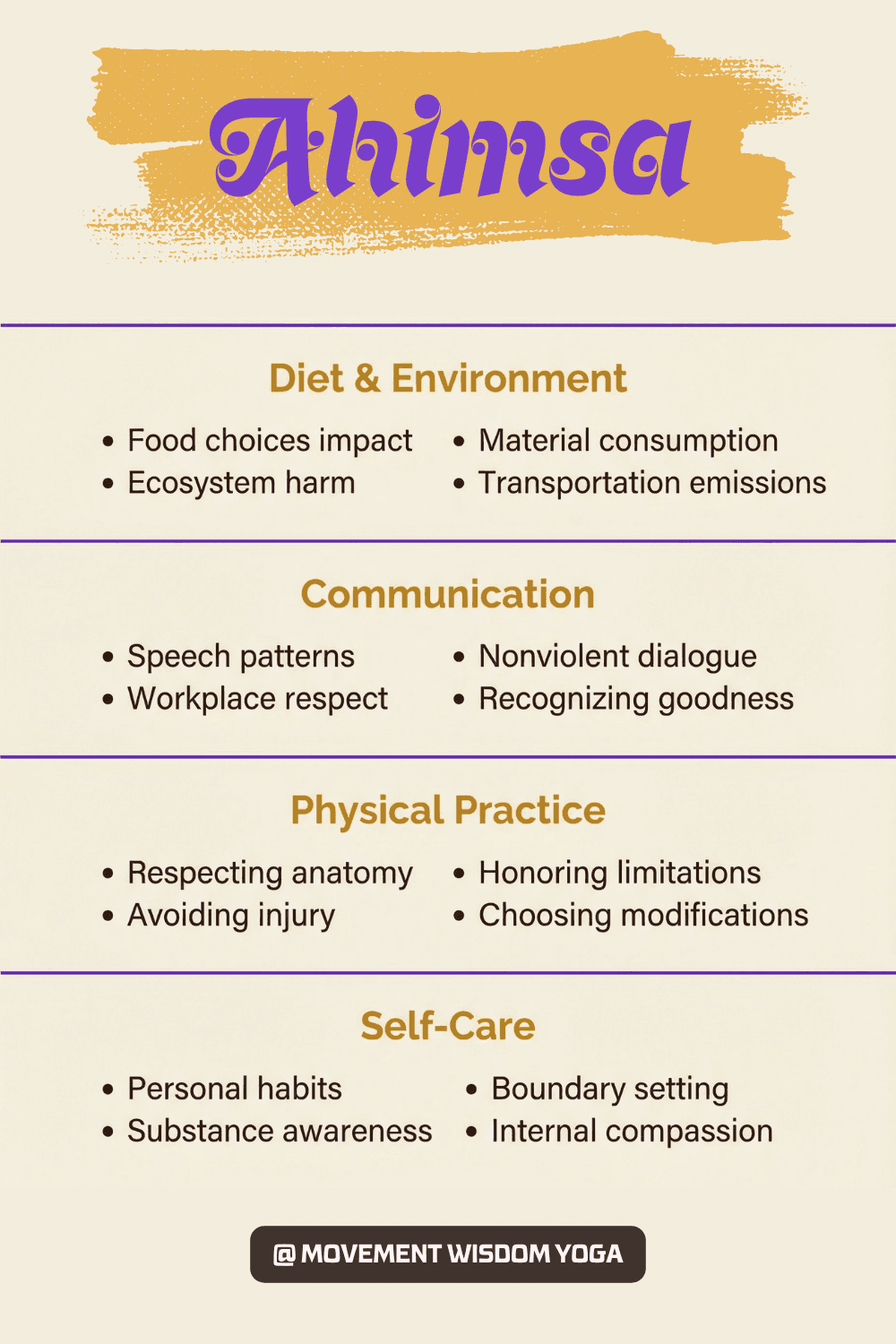
How you talk to other people, for example..? Especially people who push your buttons, or those who you might take for granted?
How do you talk to yourself..?
Are you able to swallow the hurtful comments that are on the tip of your tongue or that you say to yourself on repeat?
And how do you treat yourself? Do you take care of yourself? Do you have habits that you know to be harmful?
Do you push yourself to the point of injury in your yoga practice? Or do you respect your limitations?
Ahimsa, if you let it, extends to all aspects of life, not just what's on your plate.
It's not about being perfect
The other important aspect of ahimsa that doesn't get enough attention is that, when Patanjali put it into the Yoga Sutras, he never said explicitly how to practice it.
Which means, that if you have ever crossed paths with anyone in the 'yoga police,' telling you that you are not practicing ahimsa with some of the actions in your life, just know that there are no set rules and definitions of ahimsa.
What feels like non-harming to me might not feel like non-harming to you.
And I think it's important to point out that living without harming other beings or the planet is straight up impossible.
Scientists now believe that plants are conscious ... with that in mind, what are we yogis supposed to eat without causing harm..?!
A gazillion creatures died or had to flee their home to build the house that you now live in.
We humans cause harm in so many ways, even when we don't try. Animals do it, too, though. Bacteria as well. It's just a part of nature, whether we like it or not.
I think ahimsa should be understood as conscious awareness.
As a practice of recognizing how we fit into nature, while doing our best to respect other creatures around us.
But knowing that there is no way to live without causing any harm.
And also - not policing others based on our own personal views of ahimsa is a very yogic stance to take, too.
The best way to bring ahimsa into your life might be to examine the consequences of your actions. To realize when you're causing harm and to look for ways to reduce (not eliminate) the damage that you cause.
The Takeaway
Ahimsa is one of the most commonly talked-about concepts from the Yoga Sutras. And in some yoga circles, there is a lot of 'ahimsa policing' and judging others' behavior going on. Non-harming is a broad practice, and is about awareness and intention in all areas of life - not just about vegetarianism. And although it would be amazing, none of us is able to live in a way that causes no harm to other creatures or the planet.

Inspiration to level up your practice
Most people think leveling up their yoga practice means nailing more advanced poses, and that's of course a pretty fun thing to do. But there is more than one way to advance your practice meaningfully. Here are 4 ideas that go beyond just 'getting better at asana.'
1. Understand your unique anatomy
Every body is different. We have different bone structures, joint mobility, and proportions. Instead of forcing yourself into some idealized shape you saw on social media, spend time understanding YOUR body. Notice what feels accessible and what doesn't. When you work with your anatomy instead of against it, everything changes.
2. Try new styles
Stuck in a Vinyasa rut? Try Yin Yoga and discover what stillness and passivity can do for you. Always doing gentle practices? Challenge yourself with Hatha or Vinyasa Flow. Different styles reveal different aspects and shake you out of autopilot. Practicing both strong styles of yoga as well as gentle ones keep us in harmony with our true nature. Practicing both yin and yang styles of yoga also tends to show you how your daily life needs more yin/yang balance, too.
3. Go beyond stretching
Yoga isn't just the poses. The original meaning of 'asana' (what we call the yoga poses, in English) was simply 'the proper seat for meditation.' Explore meditation, breathwork, or chanting mantra. These practices offer benefits for mind, heart, and nervous system that stretching alone can't easily provide.
4. Live like a yogi
The yogic mindset is what separates yoga from all other physical activities. The classic texts (Bhagavad Gita, Yoga Sutras, Upanishads) contain profound wisdom for modern life. They help us take a step back, broaden our focus, and see just how full of possibility we are. Find a good teacher or commentary to help translate them, and they'll offer practical guidance for everything from handling stress to understanding your own mind.
The Takeaway
Real growth in yoga isn't always about doing more advanced poses. Sometimes it's about going deeper into the unseen parts of this very multi-faceted practice.

Top5 YTT Concerns
Watch this if you're thinking about starting a YTT but something's holding you back.
Viktor and I sat down to talk about concerns we hear from prospective students all the time. It's a 45 minute video, so get comfy and grab a warm bev before you press play. 😀
I know starting a YTT is a big step.
I hope this video helps you find clarity.
There's also a short article where we wrote down rapid-fire answers to 15 questions and concerns, in case you don't have time to watch the video.
Enjoy!


Kapalabhati ... try it if you haven't
Most yoga students never learn Kapalabhati Pranayama unless they're in a yoga teacher training course.
But this breathing technique is easy and has some huge benefits.
So you should try it if you haven't!
This breathwork builds a ton of heat, sharpens your focus, and strengthens your core in just a couple of minutes.
Here's how it works:
You kinda breathe backwards.
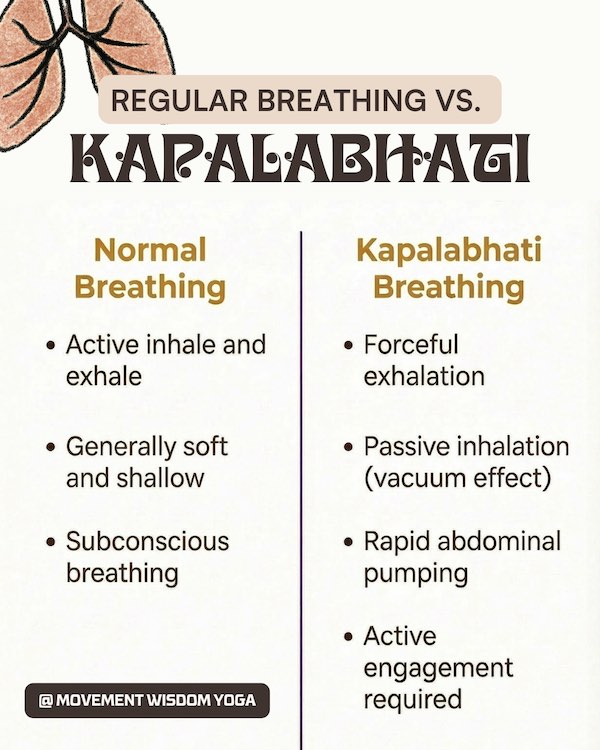
Instead of actively inhaling and exhaling, you forcefully push breath out through your nose using your abdominal muscles, then let your lungs naturally vacuum air back in without any effort.
The trick I like to cue my students is to imagine that you're holding a little tea light candle a few inches away from your nose, and you're trying to blow out the flame by pushing air strongly out of your nose.
And then let your lungs fill back up without breathing in. It sounds a little scarier than it is.
This is called a passive inhale and it can be a bit confusing at first.
The trick is to not breathe in. You simply release the abdominal contraction and let air rush back into the space you've created without doing much.
What happens immediately:
• Heat floods your belly and solar plexus from the rapid pumping
• Your metabolic rate increases 12-50% compared to quiet sitting
• Mental clarity sharpens as oxygen levels rise in the front part of your brain (hence the nick name "shining skull breath")
• Core muscles get a genuine workout
Important safety note: Step out immediately if you feel lightheaded or dizzy. These sensations mean you're at your edge and need a break, not that you're doing it wrong.
I recommend that you start with 20-30 breaths and gradually build to 50 as your strength develops. Do 3 rounds of breaths and take a couple of natural breaths in-between before starting the next round, until you have done 3. Practice three times weekly and I'm sure you'll notice changes within a month.
The Takeaway
Kapalabhati is awesome. It gives you heat, clarity, and core strength in a few minutes.

New Yoga Class
Loving Difficult People Is ... Well ... Difficult
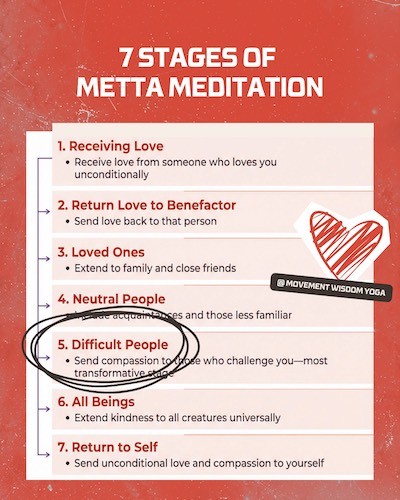
Have you ever tried loving kindness meditation?
It's a Buddhist meditation practice focused on opening your heart. It sounds good in theory, but it can be challenging and confrontational.
One part of the meditation asks you to picture someone who challenges you - someone who has wronged you, hurt you, or cast you aside.
And then, you show them love.
You send them kindness through your positive thoughts as you meditate.
Many people try it and say it changes their life.
Especially when practiced regularly.
But many people also feel like they're FAKING it.
At least the part where you send out love to difficult people.
Has this ever happened to you?
If so you probably thought one of three things:
What am I doing wrong?
Am I a horrible person?
This is BS, I don't want to forgive anyone who hurts me.
But you know what ...
It's all good!
It's okay It's ok to resist that part of the practice at first.
That's actually how it's "supposed to" work.
Loving kindness meditation doesn't require authentic feelings upfront.
The practice works through neuroplasticity. 🧠
This means that through repetition you literally build new neural pathways. And then genuine emotions develop gradually over time.
You have to build the roads before a car can drive on it.
This is very different from mindfulness meditation, where you observe your current state neutrally.
Metta actively generates positive emotional states through deliberate repetition, even when those states feel mechanical at first.
Here's why this matters for stress:
Much of your anxiety stems from difficult relationships and unresolved conflicts.
When you think of someone you resent, your jaw clenches, shoulders tense, your heart rate spikes.
Sending them loving kindness doesn't mean condoning their behavior. But it does release the toxic grip that resentment has on your nervous system.
Your negative emotions about them harm you more than they harm you.
When you think of this challenging person, it creates elevated cortisol, muscle tension, and rumination.
But, with Metta, research shows measurable benefits within 1-2 weeks: reduced reactivity, better emotional regulation, and decreased rumination.
After 4-8 weeks, practitioners report breakthrough moments where mechanical phrases suddenly connect with genuine feelings and turn deep wounds into lightness and freedom.
The Takeaway
Fake it till you make it. 😊 Here's to freedom from the past, lightness, and loving kindness!
How to choose your YTT
Choosing a 200 Hour YTT can feel overwhelming.
There are hundreds of options.
They all look pretty much the same on paper.
You’re about to invest 200 hours of your life.
And hundreds, if not thousands, of dollars.
I’ve signed up for the 'wrong' YTT more than once. I’m grateful for every single one of my teacher trainings, but if I’d known what to look for, I could have saved money and weeks of vacation days.
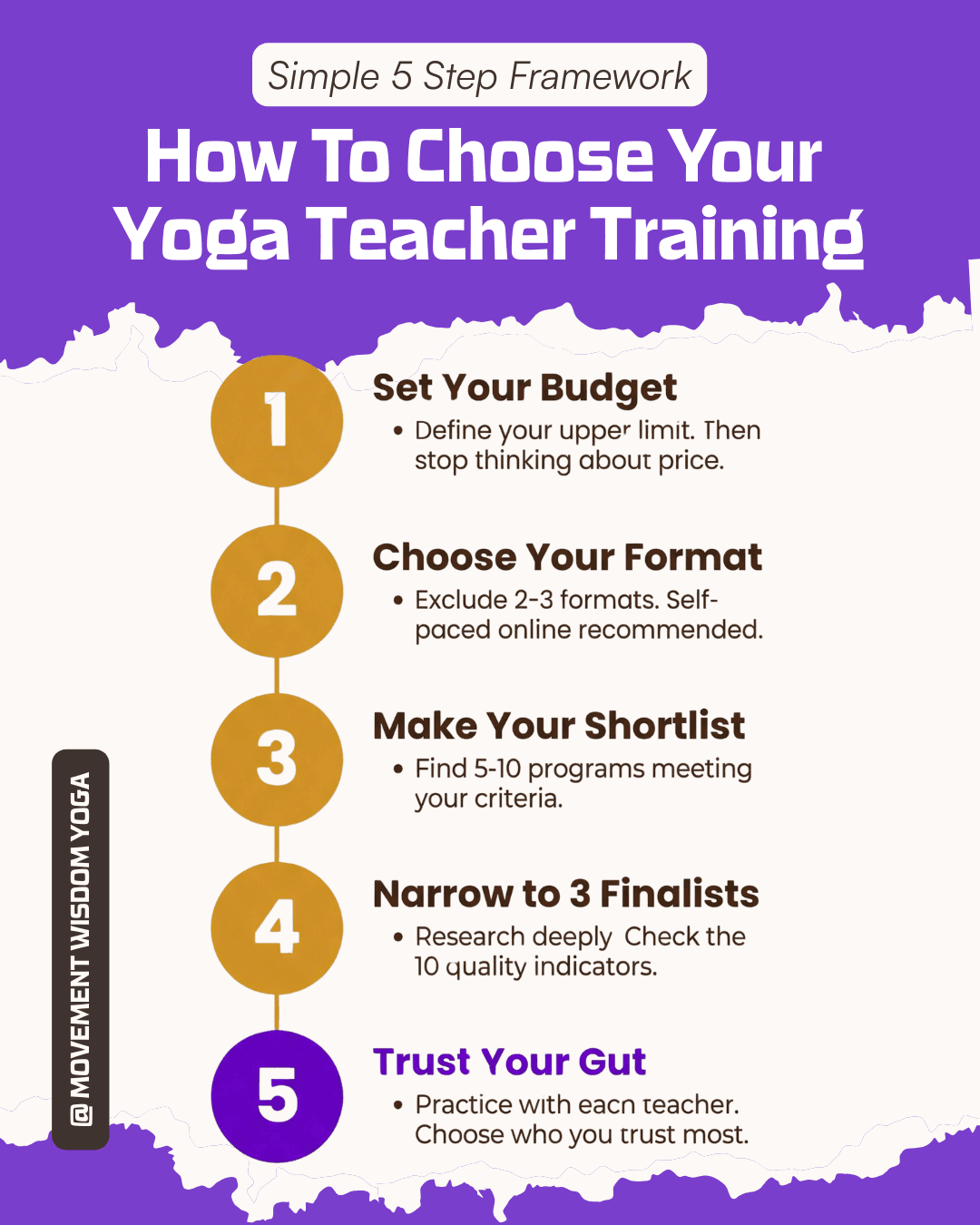
To help you choose the right YTT, I created a simple 5-step framework:
1. Set your budget: Decide your upper limit for the ideal YTT. Then, ignore price as a quality indicator. 2. Pick your format: Consider the four main formats—local studio, retreat center, online with group, or self-paced online. Cross off at least two that don’t fit your life. 3. Make a shortlist: Find 5–10 programs that match your price range and preferred format. 4. Research and narrow to 3: Look for quality indicators to separate strong programs from mediocre ones. For example, check if the lead teacher has at least 5 years of experience. 5. Practice with your top 3 teachers: Take a class, watch a video, or join a workshop. Trust your gut about who you want to spend 200 hours with.
The full article breaks down each step with specifics on what to look for and what to avoid.
I hope this helps you find the right YTT for you!

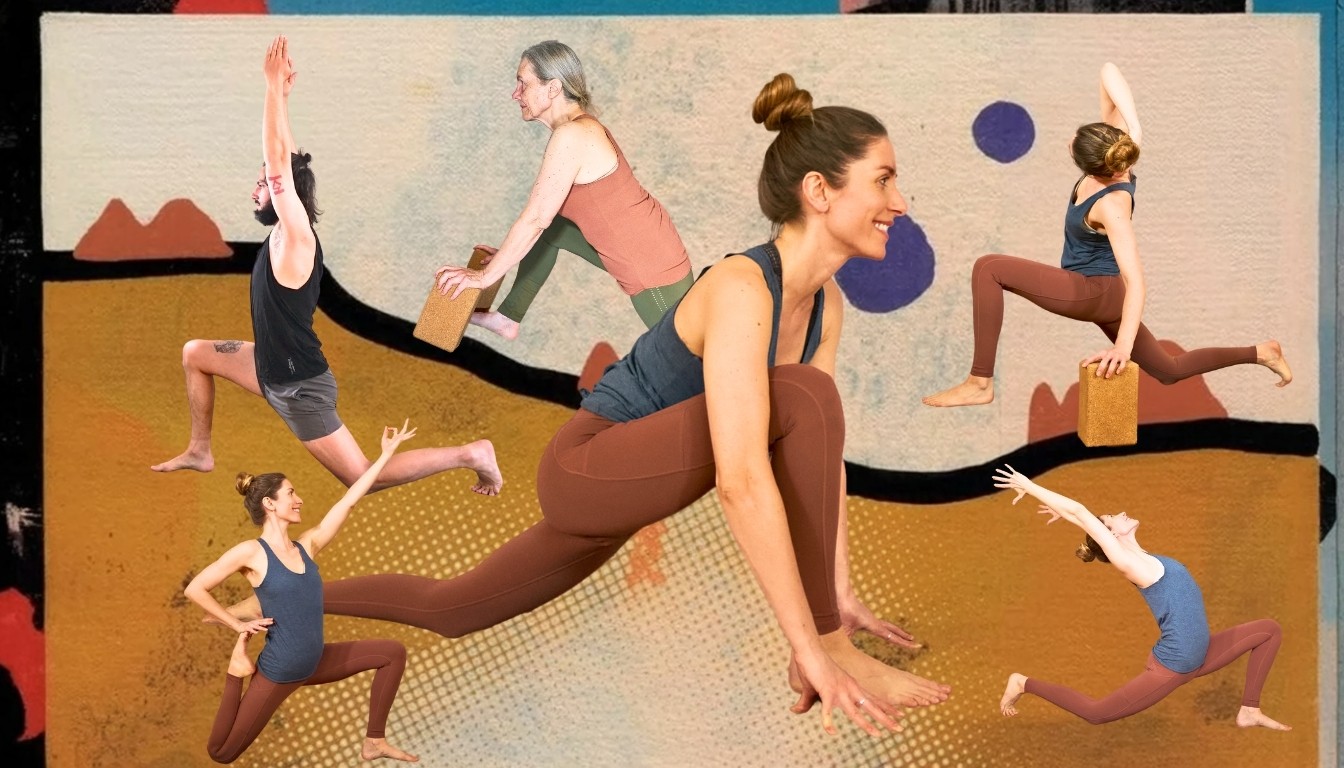
Try This In Low Lunge
Most yoga students see blocks as beginner tools. Something you use when you can't reach the floor.
But you can also use them to make a pose harder instead of easier 💪
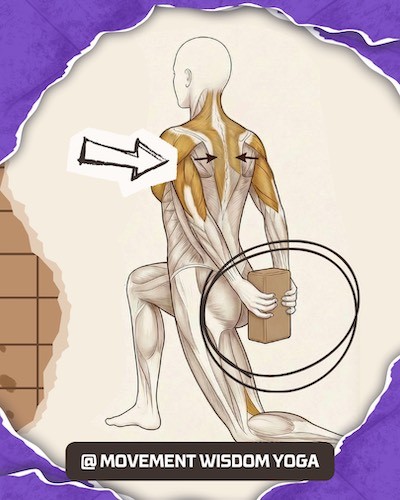
In low lunge for example, squeezing a block behind your back between your palms completely changes the experience of the pose. Your hip flexors take a back seat and your upper body suddenly becomes the main event.
Squeezing the block fires up:
Rhomboids (squeeze shoulder blades together)
Trapezius (stabilize and retract scapulae)
Posterior deltoids (hold arms in extension)
Pectoralis major (even though your arms are behind you)
Triceps (keeping elbows straight under load)
The activation of the pec is the surprising one. Your chest muscles engage even though your arms are behind your back. Try it for just a few seconds and you'll feel exactly what I mean.
For students working toward deeper backbends like Wheel, Camel, or Dancer, this variation serves as effective preparation. You're contracting and engaging many of the same muscles those poses require—building both the strength and the neural pathways you need.
The Takeaway
Blocks aren't just modifications for accessibility. They're tools you can use for creating challenge and building strength in unexpected ways.
New Yoga Class
New Yoga Class
A
This Letter is in the right place.
A
This letter is part of the word but not in the right place.
A
This letter is not part of the word.