Badge

Jess Rose
Why Your Body Can't Relax When You're Cold During Restorative Yoga
Cold muscles tense up to generate heat. It's an automatic survival response your body can't override through willpower.
This is why temperature matters so much in restorative yoga. Even slight muscular tension from being cold defeats the entire purpose of the practice - getting into your parasympathetic (rest-and-digest) state.
The problem: When muscles contract to create warmth, your sympathetic nervous system ramps up. Your body literally can't relax when it feels cold, no matter how hard you try (unless your Wim Hof!).
In active yoga styles like Vinyasa Flow, movement generates internal heat so muscles can easily release in the more passive poses, like Savasana at the end of class. But in restorative practice, you're holding still pretty much the entire time. Any tension in your muscles, even from being mildly cold, keeps you stuck in fight-or-flight mode.
What to do:
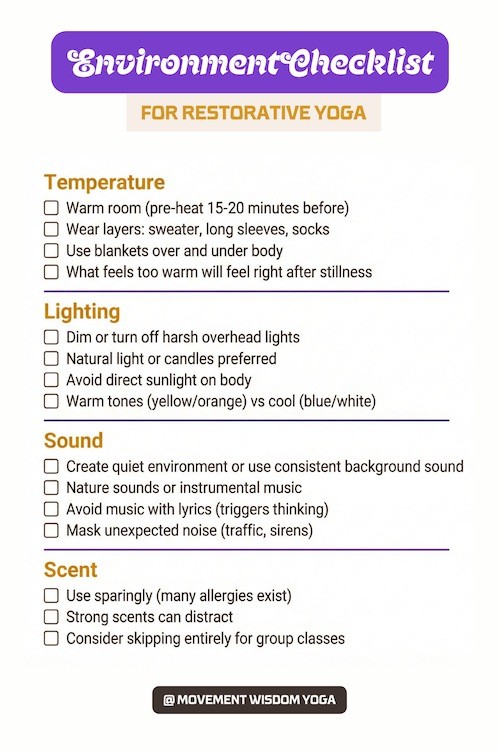
• Layer aggressively: fuzzy sweaters, long sleeves, multiple pairs of socks, and even hats and gloves in winter if you're like me! :)
• Use blankets strategically: one under your body, one over it
• Preheat your practice space 15-20 minutes before you begin
• What feels slightly too warm at the start will feel right after a few minutes of stillness
If you're teaching restorative classes, set the studio temperature 3-5 degrees warmer than you would for active classes.
Environmental design isn't separate from restorative yoga practice. It's a foundational part of it. Your nervous system reacts to cold the same way it reacts to danger, with protective tension throughout your body and mind.
The Takeaway
Your body can't override its survival response to cold, so warmth isn't a luxury in restorative yoga, it's a requirement for the nervous system to actually relax.
💜 Jess