Badge

Jess Rose
Loving Difficult People Is ... Well ... Difficult
Have you ever tried loving kindness meditation?
It's a Buddhist meditation practice focused on opening your heart. It sounds good in theory, but it can be challenging and confrontational.
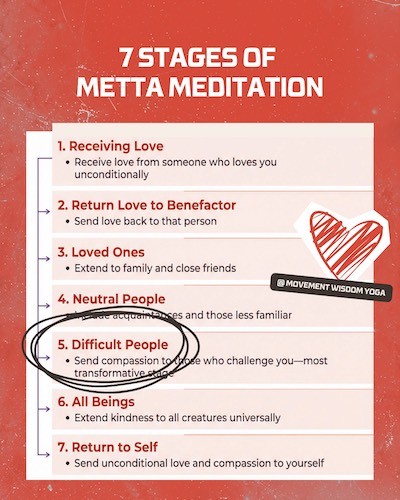
One part of the meditation asks you to picture someone who challenges you - someone who has wronged you, hurt you, or cast you aside.
And then, you show them love.
You send them kindness through your positive thoughts as you meditate.
Many people try it and say it changes their life.
Especially when practiced regularly.
But many people also feel like they're FAKING it.
At least the part where you send out love to difficult people.
Has this ever happened to you?
If so you probably thought one of three things:
What am I doing wrong?
Am I a horrible person?
This is BS, I don't want to forgive anyone who hurts me.
But you know what ...
It's all good!
It's okay It's ok to resist that part of the practice at first.
That's actually how it's "supposed to" work.
Loving kindness meditation doesn't require authentic feelings upfront.
The practice works through neuroplasticity. 🧠
This means that through repetition you literally build new neural pathways. And then genuine emotions develop gradually over time.
You have to build the roads before a car can drive on it.
This is very different from mindfulness meditation, where you observe your current state neutrally.
Metta actively generates positive emotional states through deliberate repetition, even when those states feel mechanical at first.
Here's why this matters for stress:
Much of your anxiety stems from difficult relationships and unresolved conflicts.
When you think of someone you resent, your jaw clenches, shoulders tense, your heart rate spikes.
Sending them loving kindness doesn't mean condoning their behavior. But it does release the toxic grip that resentment has on your nervous system.
Your negative emotions about them harm you more than they harm you.
When you think of this challenging person, it creates elevated cortisol, muscle tension, and rumination.
But, with Metta, research shows measurable benefits within 1-2 weeks: reduced reactivity, better emotional regulation, and decreased rumination.
After 4-8 weeks, practitioners report breakthrough moments where mechanical phrases suddenly connect with genuine feelings and turn deep wounds into lightness and freedom.
The Takeaway
Fake it till you make it. 😊 Here's to freedom from the past, lightness, and loving kindness!
💜 Jess